
Amigurumi · Intermediate
How to Crochet a Beaded Jellyfish Charm with Spiral Tendrils
Create an ethereal ocean keepsake with this step-by-step tutorial for a beaded crochet jellyfish charm featuring layered frills, two-tone corkscrew tentacles, and silver sea charms.

A jellyfish charm is a dome, a ruffled edge, and tendrils that spiral because they are crocheted with intentional increases or chain twists — not because the yarn curled by accident. Beads must be pre-strung or added with a needle that fits the bead holes before you commit tendril length.
Materials
- Sport/DK smooth yarn, ~25–35 yd main + contrast for ruffle
- Hook 2.5–3.5 mm; fiberfill; seed beads or 4–6 mm beads; fine needle; keyring
- Dome ~1.25–1.5 inches wide
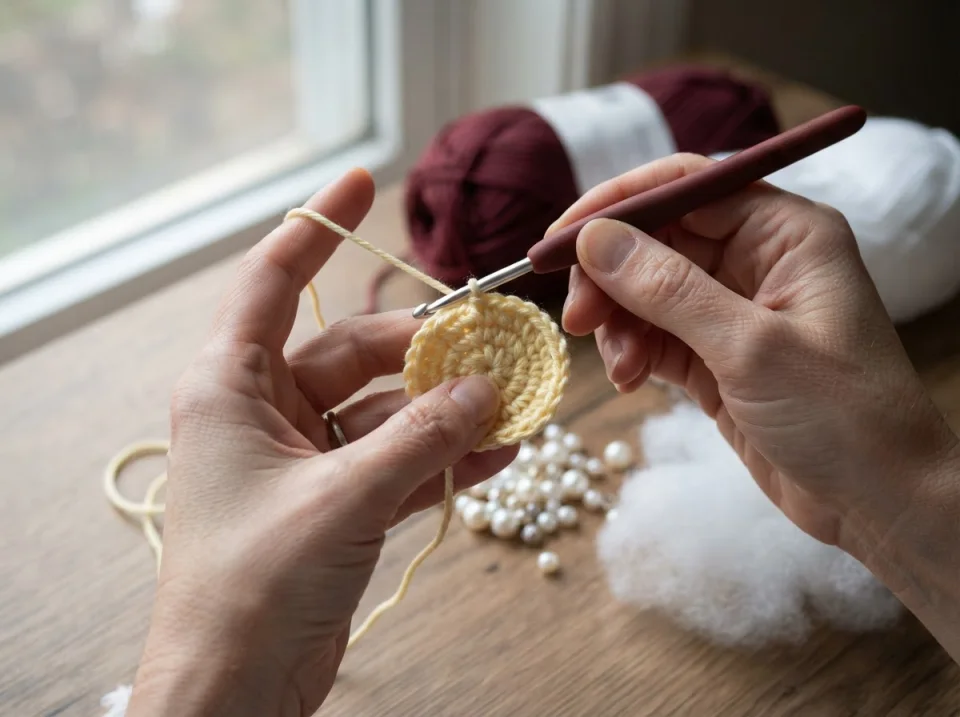
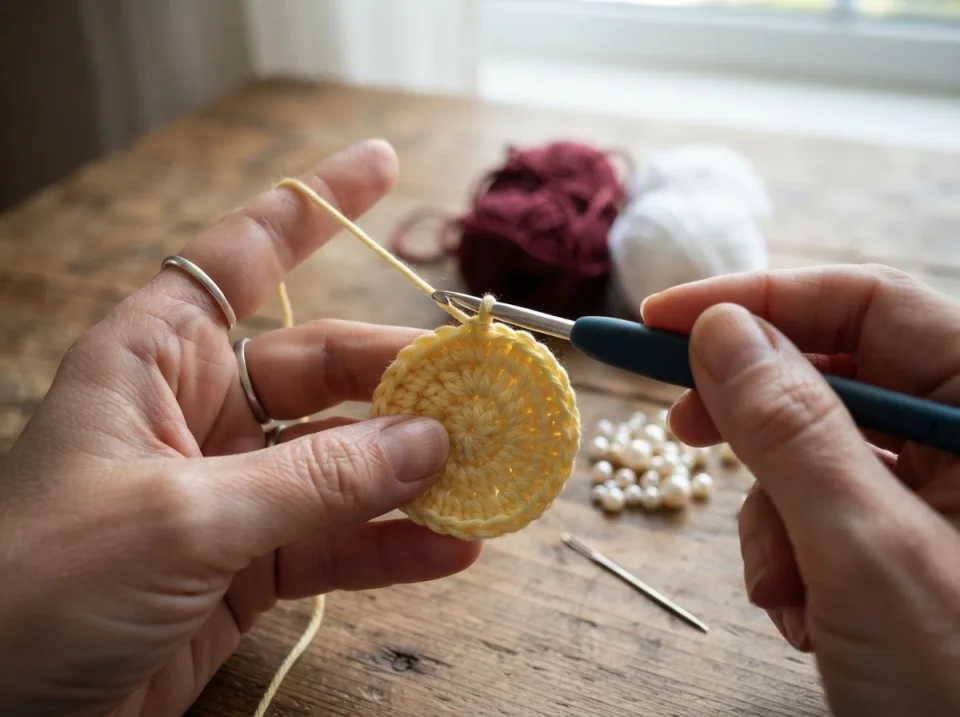
Dome
Magic ring, increase to a flat-ish circle, then work even without increases so the sides turn down into a bell. Light stuffing only — a rock-hard dome looks like a bead, not a jelly.
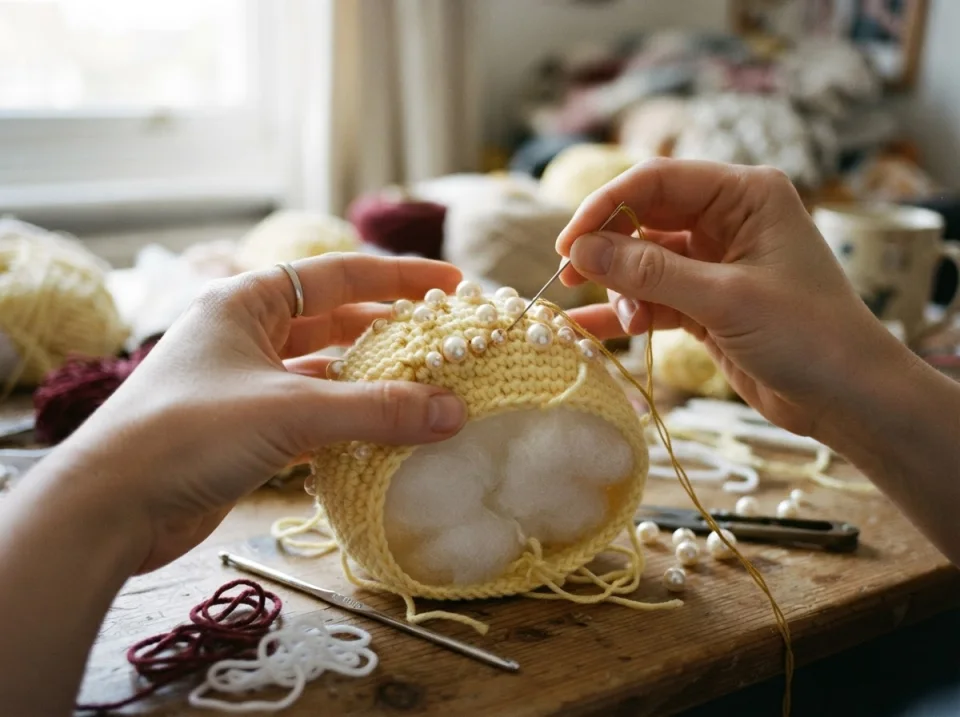
Ruffle skirt
On the last dome round, work 2–3 stitches in each stitch (sc or hdc) to flare a skirt. Too few and there is no ruffle; three in each can lettuce-edge — block gently or use 2 in each.
Spiral tendrils
Chain a long length (20–40), then work 2 sc in each chain back — the extra stitches force a corkscrew. Or chain and slip stitch back tightly for a tighter coil. Make 4–6 tendrils of mixed lengths. Pre-string beads onto tendril yarn and slide them up as you crochet, or sew beads on after.
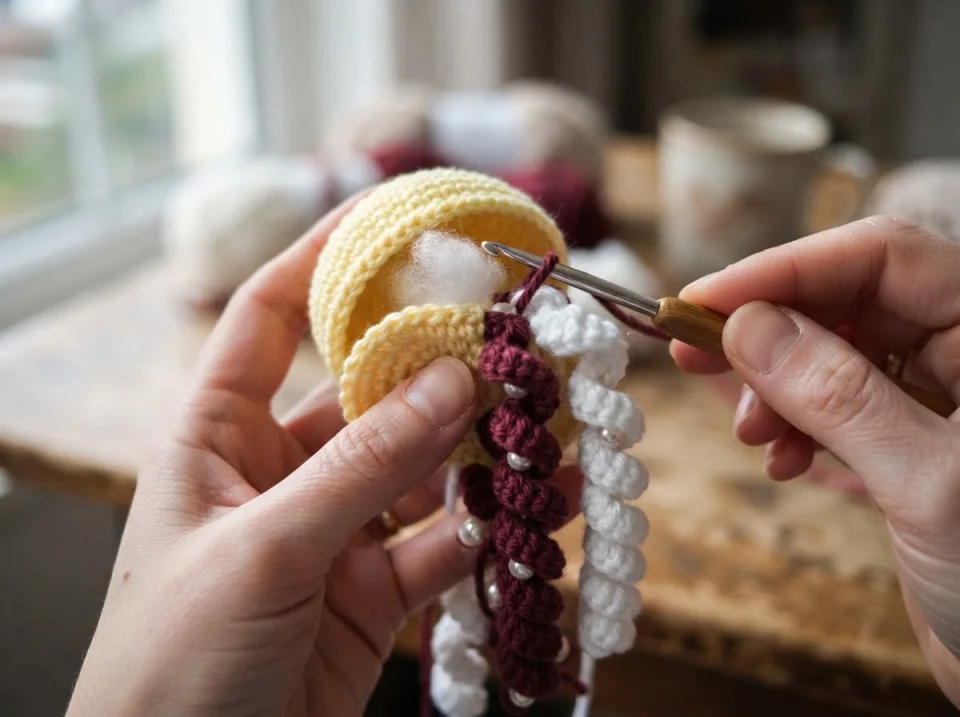
Sew tendrils under the dome, spaced evenly. Attach keyring at the top center through multiple stitches.
Bead safety
Skip beads for under-3 gifts. Knot and weave tendril ends so beads cannot slide off.
Failures
- Tendrils hang straight: not enough stitches per chain — use 2 sc per chain
- Dome collapses: understuffed or hook too large
- Ruffle cups under: too many stitches — reduce density
Rewrite notes for makers using this page
This tutorial was rewritten on the same URL so search indexing stays intact. The structure is built around the decisions this project actually forces — sizing, fiber, order of assembly, and failure modes — not a shared template used on every page of the site.
Count stitches at the end of every round or row until the motion is automatic. Markers at the start of rounds are cheaper than frogging a finished piece. If a number in the pattern and the number in your hands disagree, stop and find the error before the next increase round locks it in.
Record yarn brand, hook size, and finished measurements when you succeed. Weight-class labels vary by brand; your note beats guessing next month. Wash or wear-test before gifting whenever the item will leave your house.
Comments that help others include yarn name, hook size, which section failed, and what fixed it. If your gauge differs from the ranges here, report stitches per four inches — that data improves the next revision.
#crochet jellyfish #amigurumi charm #ocean crochet #beaded crochet #spiral tendrils
Comments
No comments yet. Questions, corrections, and notes from your own attempt are welcome.