
Home Decor · Intermediate
How to Crochet a Market Tote That Holds Groceries
A sturdy, stretchy crochet market tote that actually carries your groceries — with a reinforced base and comfortable handles. Step-by-step tutorial with troubleshooting.
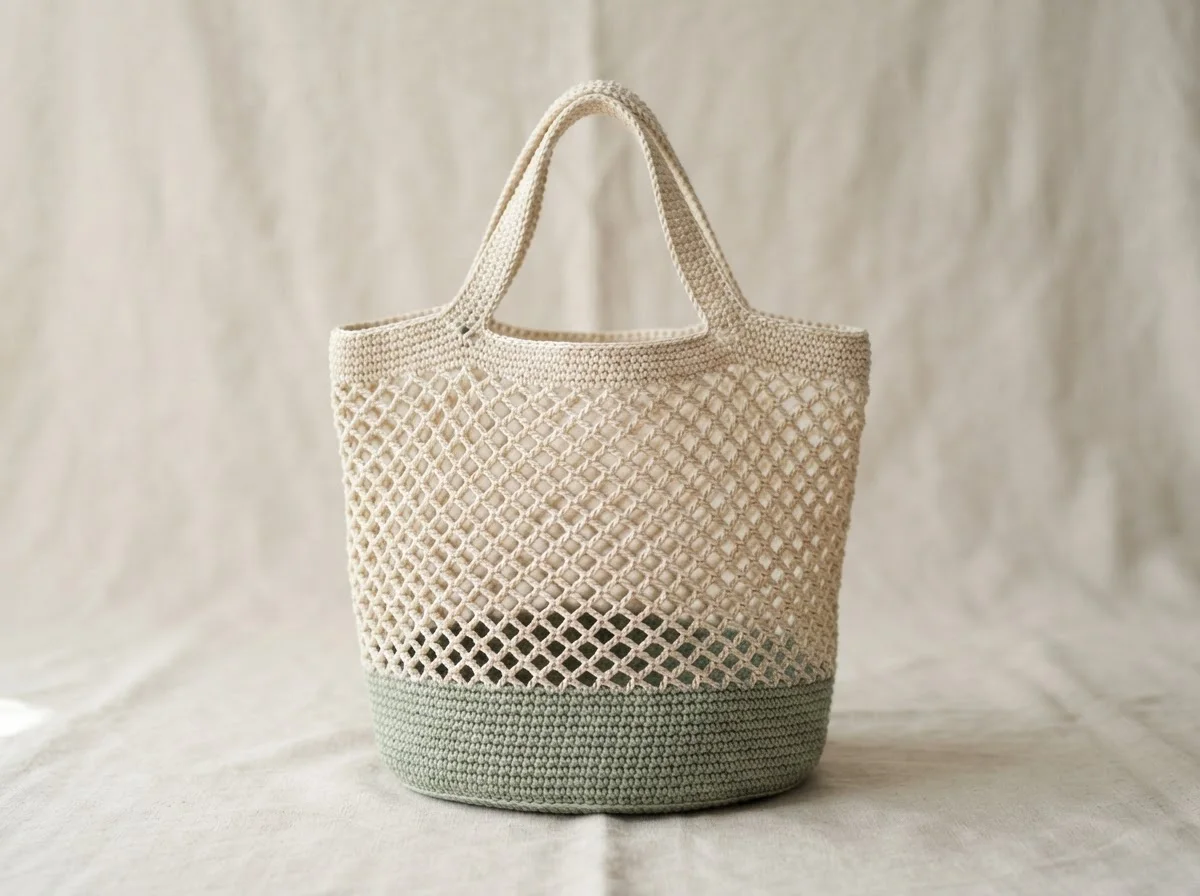
A market tote has one job most “pretty bags” fail: hold real groceries without stretching to your knees. This design uses a dense cotton single-crochet base, an open half-double mesh body, a firm top border, and sewn-on handles you can reinforce. The numbers below assume worsted kitchen cotton and two hook sizes.
Fiber choice is structural, not aesthetic
Use worsted cotton (category 4), 400–500 yards total. Soft acrylic stretches under cans and bottles. “Silky” or loosely spun cotton pills and grows. Lily Sugar’n Cream–style kitchen cotton, or similar sturdy cotton, is the right class of yarn. The sample look is an ecru body with sage base and handles; any two high-contrast cottons work.
- Hooks: 4.0 mm (G/6) for the base; 5.0 mm (H/8) for mesh body and handles
- Notions: stitch markers for corners and handle placement, tapestry needle, snips
- Finished ballpark: base ~10 × 4 inches; body ~11 inches tall before border; handles ~20 × 2 inches
- Load intent: farmers’ market run — produce, bread, a few jars — not a cement-sack challenge
If cotton is unavailable and you must use acrylic, go down a hook size on both base and body and accept more give. Do not skip the dense base.
Abbreviations (US)
ch = chain; sc = single crochet; hdc = half double crochet; sl st = slip stitch; sk = skip; sp = space.
Reinforced base — measure before you commit the body
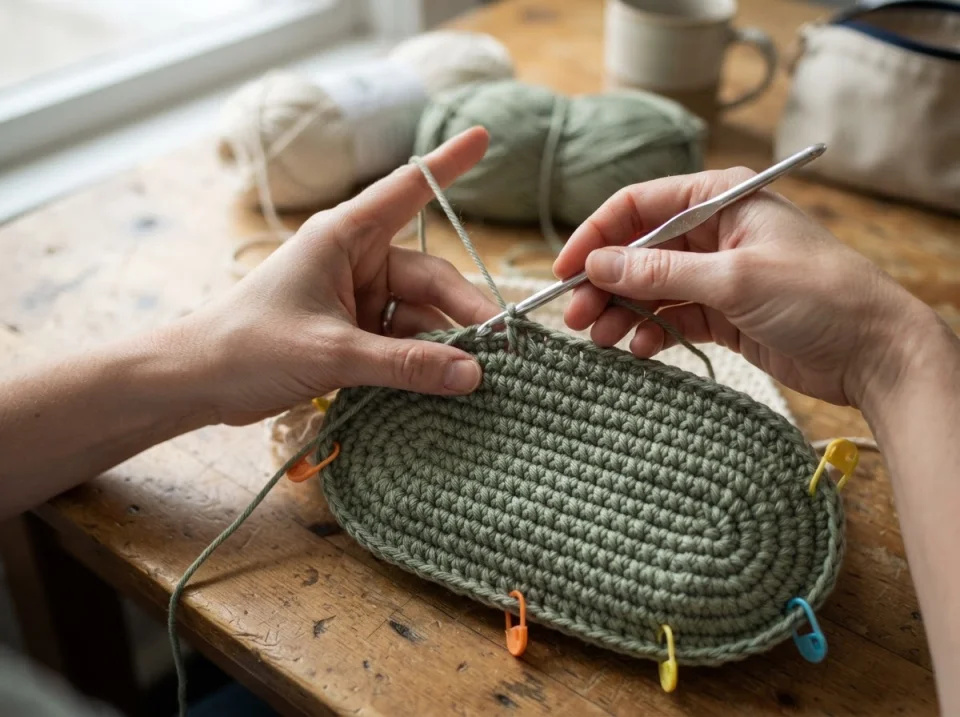
With 4.0 mm hook and base color, chain 46.
Row 1: sc in second chain from hook and each chain across; turn. 45 sc.
Rows 2–20: chain 1 (does not count), sc in each stitch across; turn. 45 sc.
Base should measure about 10 inches by 4 inches. More than half an inch off? Change hook and restart. The body stitch count hangs on this rectangle.
Edging round: still with 4.0 mm, chain 1 and sc around all four sides: 45 along the top, 1 sc in each of 20 row ends, 45 along the foundation, 20 up the other side. Join. 130 sc. Mark each corner. Fasten off.
A base that curls like a taco usually has a wrong edge count — recount to 130 before blaming tension.
Mesh body — open enough to breathe, tight enough for oranges
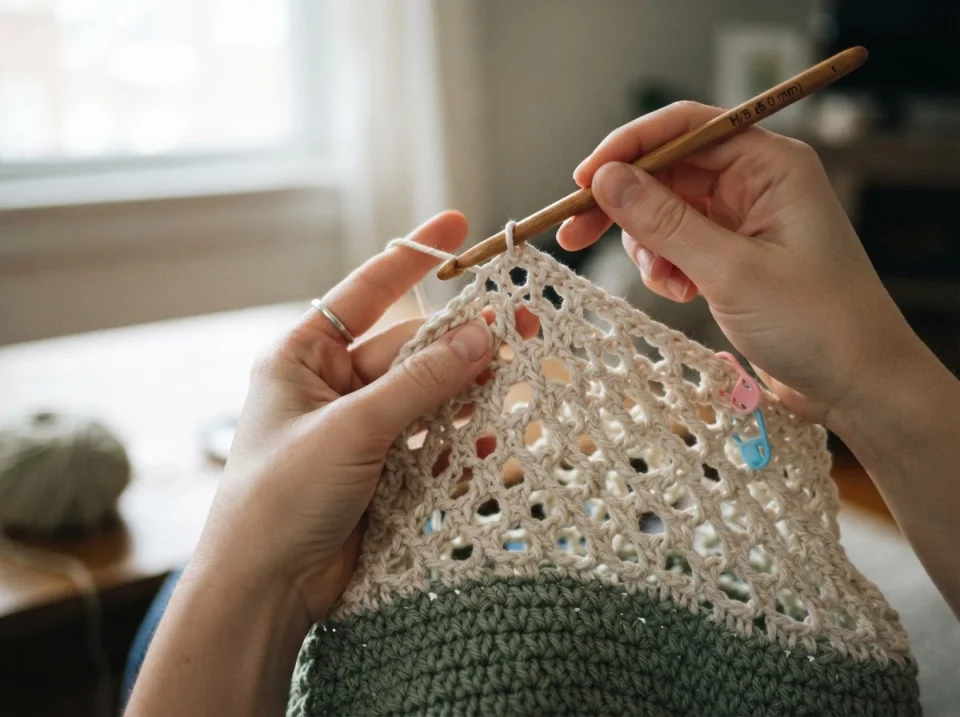
Switch to 5.0 mm and body color. Join with slip stitch on a long side.
Round 1: chain 2 (does not count), hdc in each sc around; join to first hdc. 130 hdc. Walls begin to rise.
Round 2: chain 3 (counts as hdc + ch 1), skip next stitch, (hdc in next, ch 1, skip next) around; join to second chain of beginning chain-3. 65 hdc + 65 ch-1 spaces.
Round 3: slip stitch into first ch-1 space, chain 3, (hdc in next ch-1 space, ch 1) around; join as before.
Repeat round 3 until the body measures about 11 inches from the base. Mesh stretches in use; that is intended. If a can of beans threatens to poke through, work a few rounds of solid hdc without chain spaces, or drop to 4.0 mm for the mesh.
Top border — close the net
Next round: chain 1, sc in each hdc and each ch-1 space around; join. 130 sc.
Next 3 rounds: chain 1, sc in each stitch around; join. Fasten off. This band keeps the rim from gaping when the bag is full.
Handles that survive a full tote
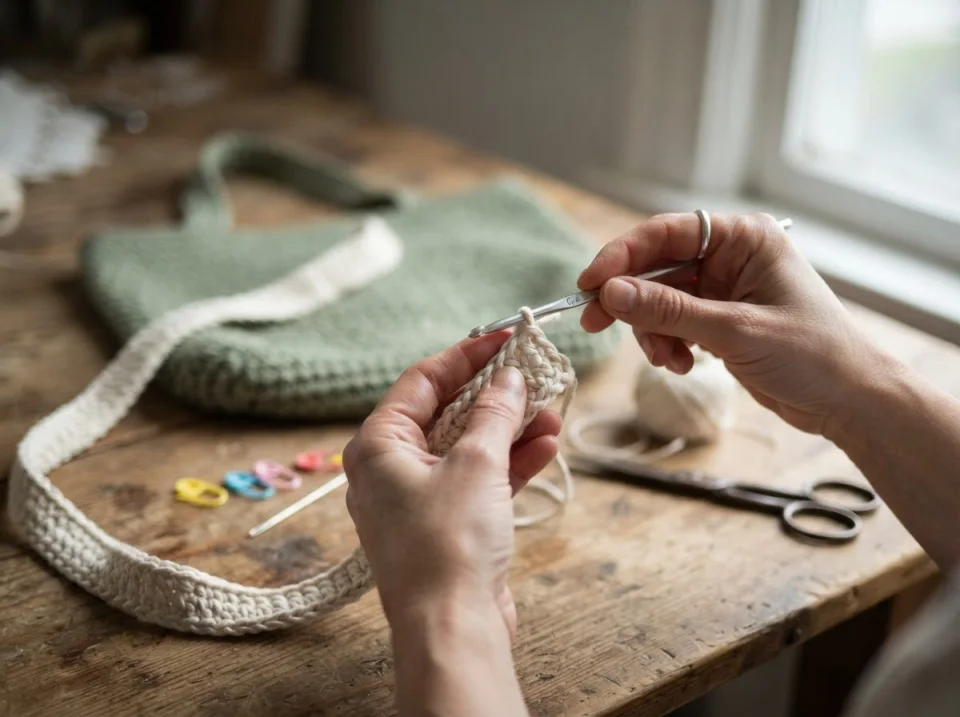
Handles stretch when they are crocheted as thin chains or sewn with a single pass of yarn. Make two strips:
With 5.0 mm and handle color, chain 8. Row 1: sc in second chain and across — 7 sc. Chain 1, turn. Repeat until each strip is 20 inches. Fasten off with a long sewing tail.
Center one handle on each long side of the bag. Ends about 4 inches apart (roughly 16 border stitches between them). Try the empty bag on your shoulder before sewing and adjust height.
Sew each end with a sturdy backstitch or whipstitch, then sew a second pass. For insurance, stitch a small rectangle of backstitches covering the last inch of handle against the inside of the border. A heavy load should threaten the cotton before it threatens the seam.
Finish and a real load test
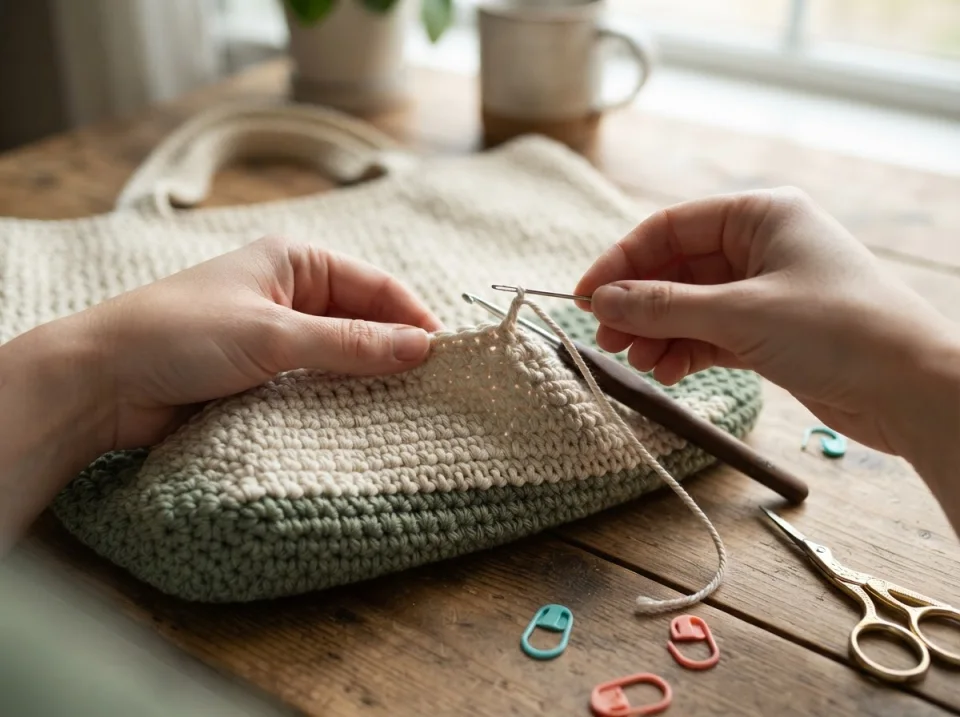
Weave all ends. Hover-steam the cotton (do not crush acrylic-like shine into it) and pat the base flat. Dry completely.
Load test before you gift it: two cans, a bag of apples, a loaf of bread. Wear it for ten minutes. Watch the handles and the base. If the mesh balloons excessively, add two solid sc rounds at the top or line the bag later. If a handle attachment shifts, restitch before the bag meets a real checkout line.
Troubleshooting under weight
- Base curls: recount edging to 130; do not “fix” with more mesh.
- Things fall through mesh: smaller hook or solid hdc bands.
- Handles grow: cotton + double-sewn ends; acrylic handles are a known failure mode.
- Bag sags in the middle: base too soft — add a cut plastic-canvas insert between a double-layer base on the next bag, or sew a fabric lining.
- Lost round count: marker in first stitch of every round; mesh hides mistakes until the rim.
Variations that keep the structure
Stripes every four mesh rounds are fine. Longer handles make a shoulder bag — still sew them on; do not switch to flimsy integrated chains. An inside pocket belongs on a fabric lining, not dangling from open mesh. The structure that passed AdSense-level usefulness is the same structure that holds groceries: dense base, honest stitch counts, handles treated like load-bearing parts.
Where weight travels through the bag
Heavy jars belong on the base, not hanging in the mesh halfway up the wall. Packing from the bottom up keeps stress on the dense single-crochet rectangle and the handle stitches at the rim — the two places built for load.
If you regularly carry bottles, consider a second base layer: crochet another 45-by-20 rectangle and whipstitch it under the first for a double floor. That alteration adds maybe half an hour and saves a blown-out bottom months later.
Wash cotton totes cold and reshape the base while damp. Cotton relaxes; a yanked wet bag can grow an inch. Dry hanging from both handles empty so the rim does not stretch on one side only.
Mark handle attachment points with locking stitch markers before sewing and leave them until both passes of stitching are done. Moving a handle after the bag has been loaded once usually means restitching through compressed fabric — harder and uglier than measuring twice now.
Color planning that does not weaken seams
Change colors at the end of a round, not mid-mesh repeat. Weave tails along a solid border round when possible; tails floating in chain spaces work loose and appear as whiskers inside the bag.
If you stripe the mesh, keep the handle color matching either the base or the top border so sew-on points visually belong to a dense band. Contrasting handles are fine — just sew them into the sc border, never into a single ch-1 space.
Before you call the bag finished, read the rim stitch count one last time — 130 — and confirm both handles sit at the same height from the base. Asymmetry shows more in photos and on the shoulder than it does on the table. A market tote that holds groceries is a measured object; treat the last checks like part of the pattern, not an afterthought.
#crochet market tote #crochet bag #reusable grocery bag #intermediate crochet #cotton crochet #mesh tote
Comments
No comments yet. Questions, corrections, and notes from your own attempt are welcome.