
Patterns · Easy
How to Crochet a Phone Pouch with a Button Loop: A Cozy Little Home for Your Phone
Keep your phone safe and snug in a handmade pouch. This easy crochet project uses simple stitches and a button loop closure — perfect for beginners ready for a small challenge.
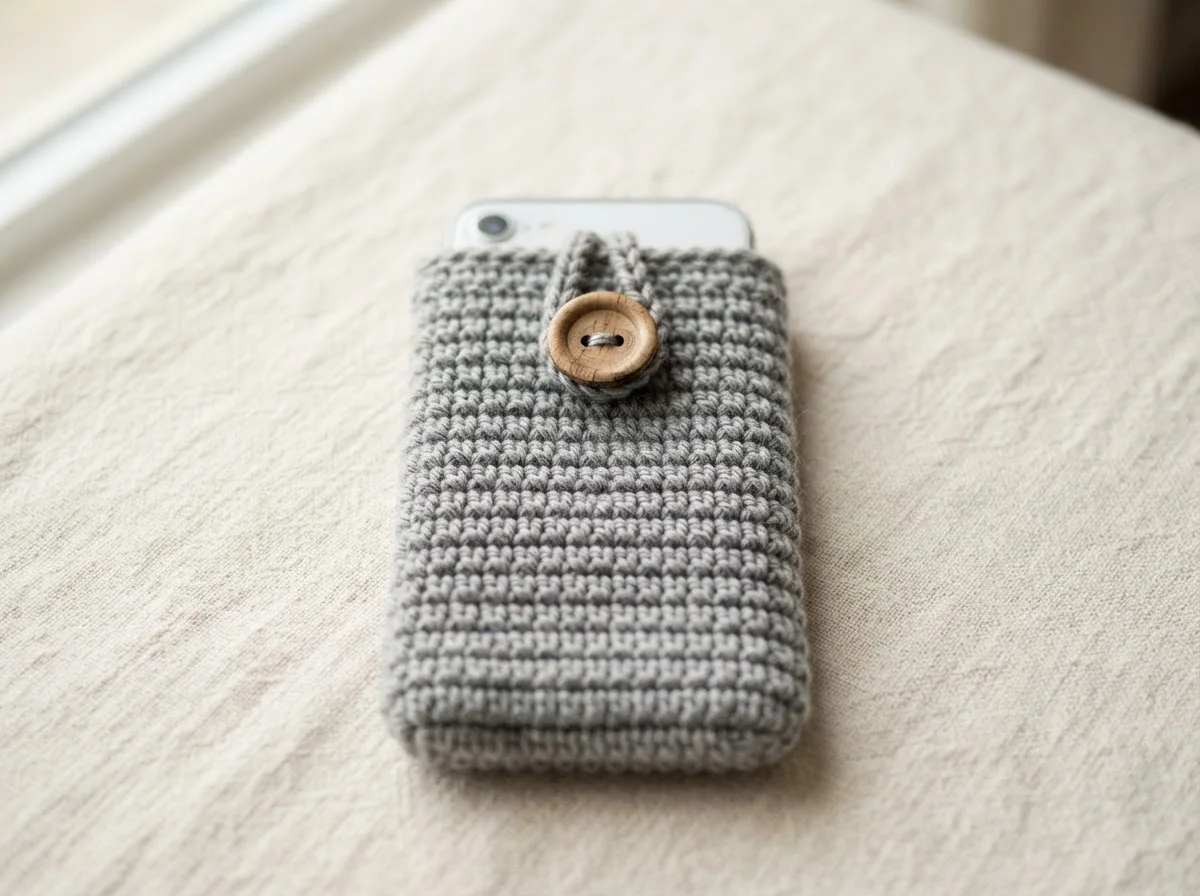
A phone pouch fails when it is too shallow, too stretchy, or closed with a loop that pops open in a bag. This pattern builds a dense single-crochet sleeve sized from your phone’s measurements, plus a button loop tested against the actual button before you sew.
Measure the phone, then add ease
Measure height, width, and depth of the phone in its daily case. Add about 0.25–0.5 inch to width and depth for crochet thickness, and about 0.5 inch to height so the phone sits down before the flap/loop. Write the numbers down.
- Worsted cotton or cotton blend — denser than soft acrylic — ~70–100 yards
- 4.0–4.5 mm hook for firm fabric
- Button ~15–20 mm, needle, thread, markers
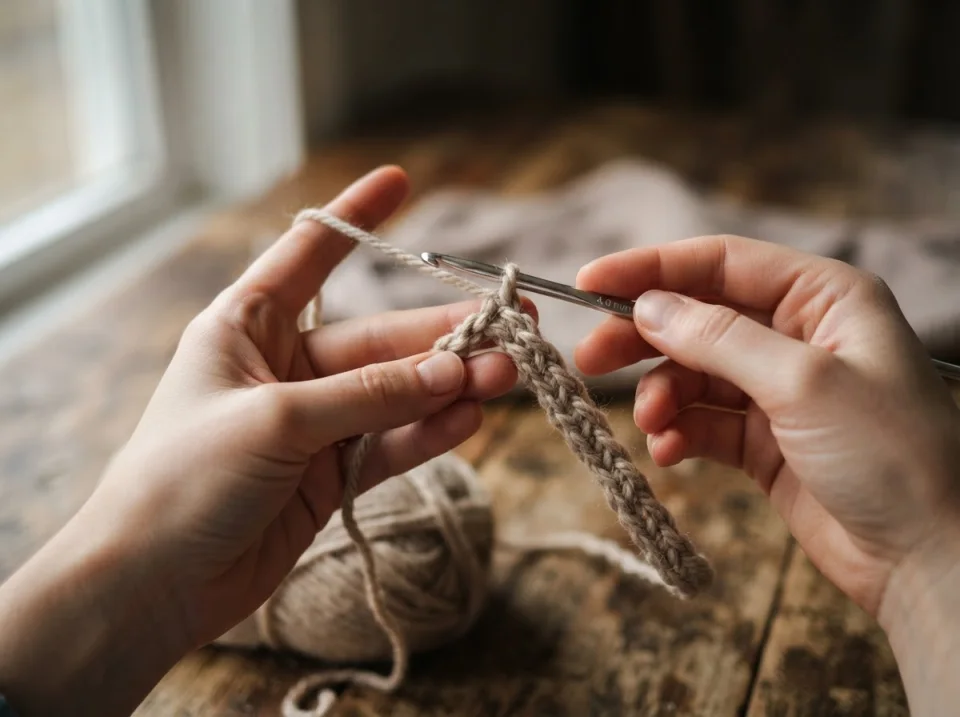
Body — oval or flat rectangle folded
Option A: crochet a flat rectangle twice the phone height plus flap, fold, and seam the sides. Option B: work a short oval base then sc in the round for a true sleeve. Either way, fabric should feel firm — if the phone silhouette shows through loosely, go down a hook size.
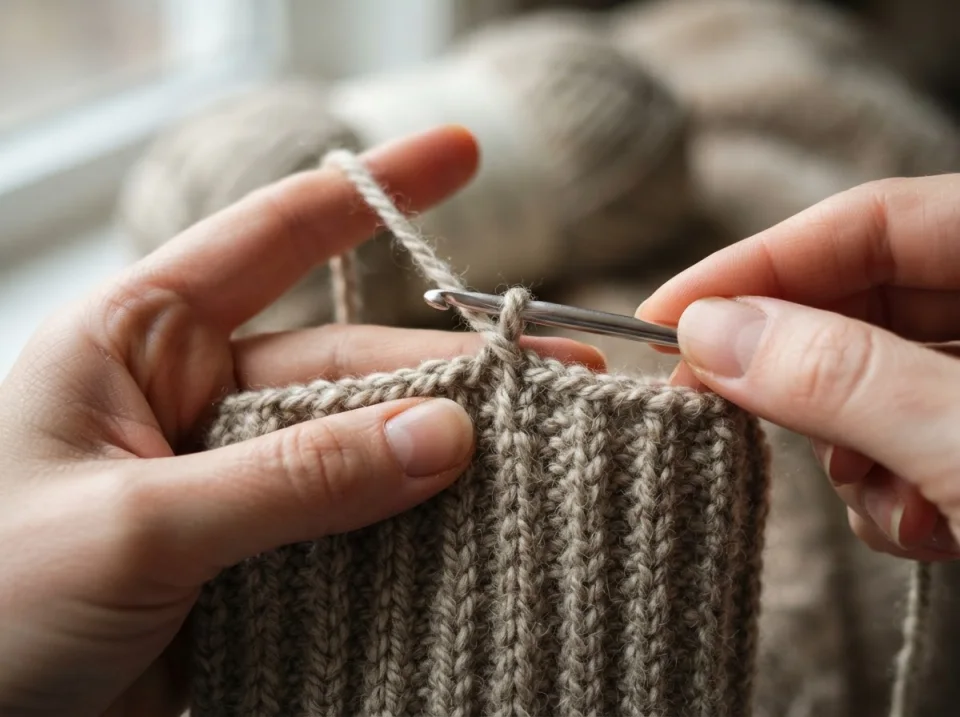
Height check with the phone inside
Insert the phone before you fasten off the body. The top edge should clear the phone by a finger width. Adjust now; borders will not add useful depth.
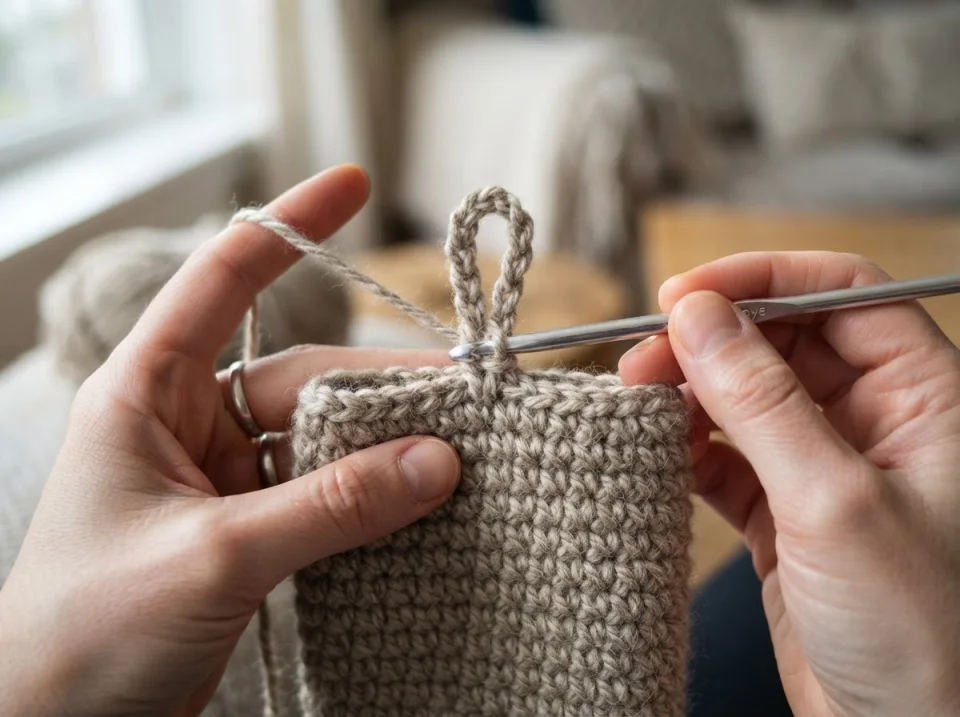
Button loop that actually catches
Chain a loop, slip stitch back, and test around the button before sewing the button on. The loop should need a light stretch to pass, then sit snug. A floppy loop opens in a tote; an undersized loop fights you every time.
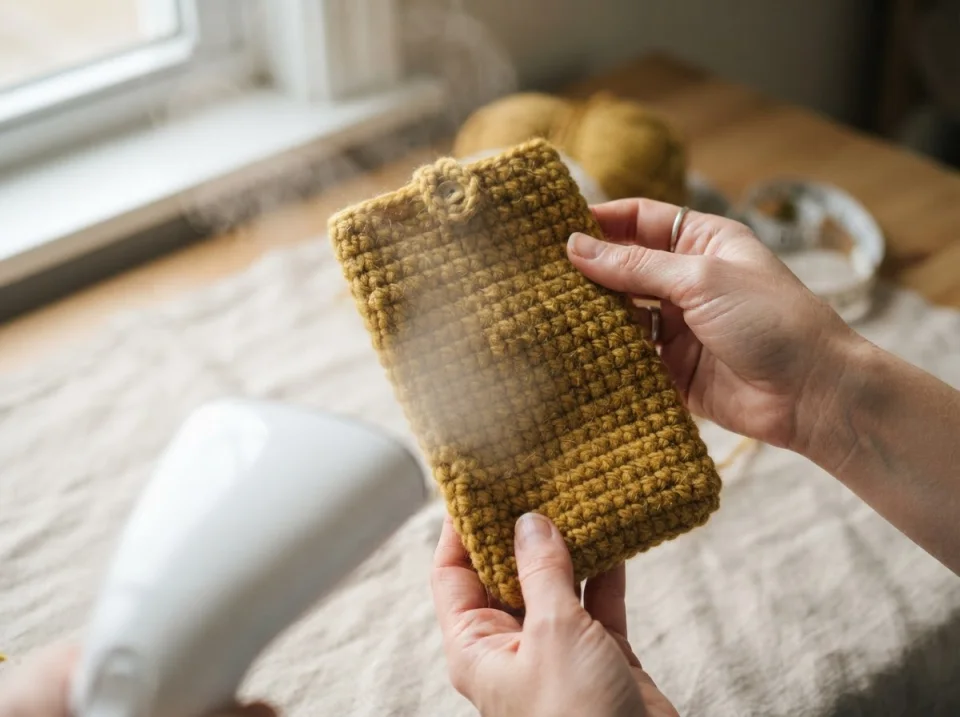
Sew the button through several crochet stitches with sewing thread doubled, not yarn alone — yarn saws itself short with use.
Optional lining
A simple fabric sleeve inside stops dust from catching on acrylic. For cotton pouches, lining is optional but slick phones slide less against fabric than against open stitches.
Fit failures
- Phone falls out: body too wide or fabric too soft — smaller hook, fewer stitches
- Cannot insert phone: not enough ease — frog last rounds and add stitches
- Loop pops: lengthen slightly or move button
Quality bar for this rewrite
This tutorial was rewritten in place to replace generic AI-pattern structure with specific teaching: numbers you can measure, mistakes you can diagnose, and a section order unique to this skill. Keep the URL unchanged so search indexing stays intact. If you bookmarked this page before, you are in the same place with clearer instructions.
Work under good light with a light-colored swatch yarn when a step is new. Dark variegated yarn hides the exact loop you need to enter. When a count is written, count out loud until the motion is automatic. Silent guessing is how pairs stop matching and circles become hexagons.
Frogging is a tool, not a failure. Unravel to the last correct stitch marker and resume. Leaving a known error “because it is only one stitch” teaches the fabric to spiral out of true for the rest of the piece. Markers at the start of rounds and rows are cheaper than ripping a finished cuff.
Record hook size, yarn brand and colorway, and finished measurements in a note on your phone when you succeed. Future you will not remember which 5.0 mm hook and which “worsted” made the good sample. Brand differences inside the same weight class are real.
Wash or wear-test anything that will leave your house. Techniques that only work on the coffee table are incomplete. For garments and baby items, check seams, ties, and woven ends after the first wash before you call the project done.
Comments that help other makers include yarn name, hook size, which section failed, and what fixed it. “Help” with no details cannot be answered well. If a measurement range here does not match your gauge, say what you got for four inches — that data improves the next revision.
Prerequisites mentioned in the text are not decoration. If a step assumes a magic ring, post stitches, or invisible decrease, practice that skill on scrap first. Most “this pattern is impossible” moments are missing prerequisites, not missing talent.
#crochet phone pouch #button loop #easy crochet #small crochet projects #crochet accessories #beginner crochet
Comments
No comments yet. Questions, corrections, and notes from your own attempt are welcome.