
Home Decor · Beginner
How to Crochet a Small Flower in 5 Minutes
A quick and easy crochet flower pattern that works up in just five minutes—perfect for using up scrap yarn and adding a sweet touch to any project.
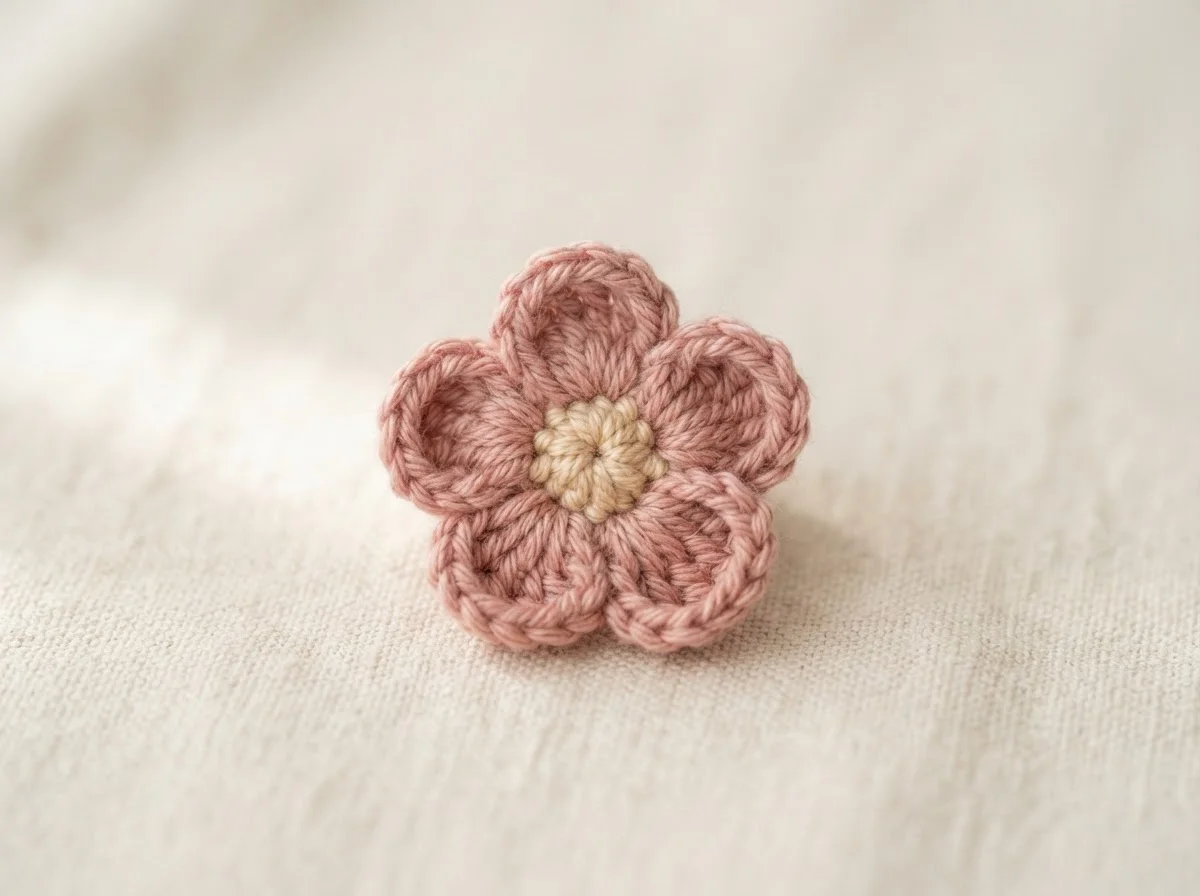
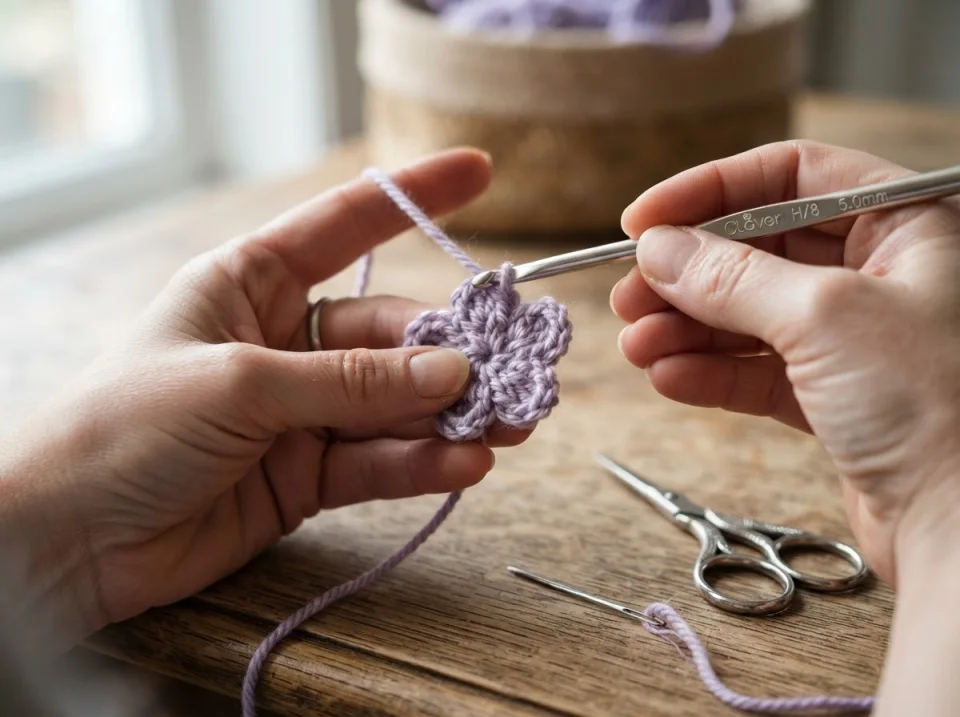
A five-minute flower is a magic-ring center plus one petal round. The speed comes from worsted yarn and a 4.0–5.0 mm hook, not from skipping structure. Use this as applique practice: neat centers and even petals matter more than racing the clock on the first try.
Scrap kit
- Worsted scraps: center color ~2 yd, petal color ~5 yd
- Hook 4.0–5.0 mm
- Needle for the starting tail
- Finished bloom ~1.5–2 inches across
Center
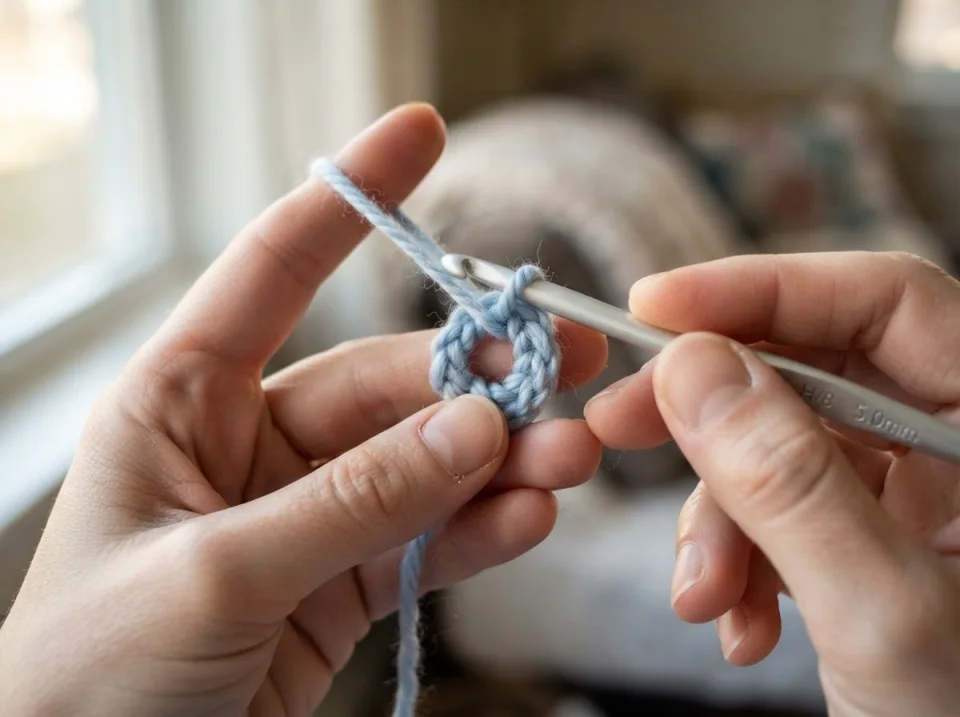
Magic ring, 6 sc (or 5–7 for smaller/larger centers). Pull closed and lock the tail with a weave through the center — an unlocked ring opens when you sew the flower onto a hat.
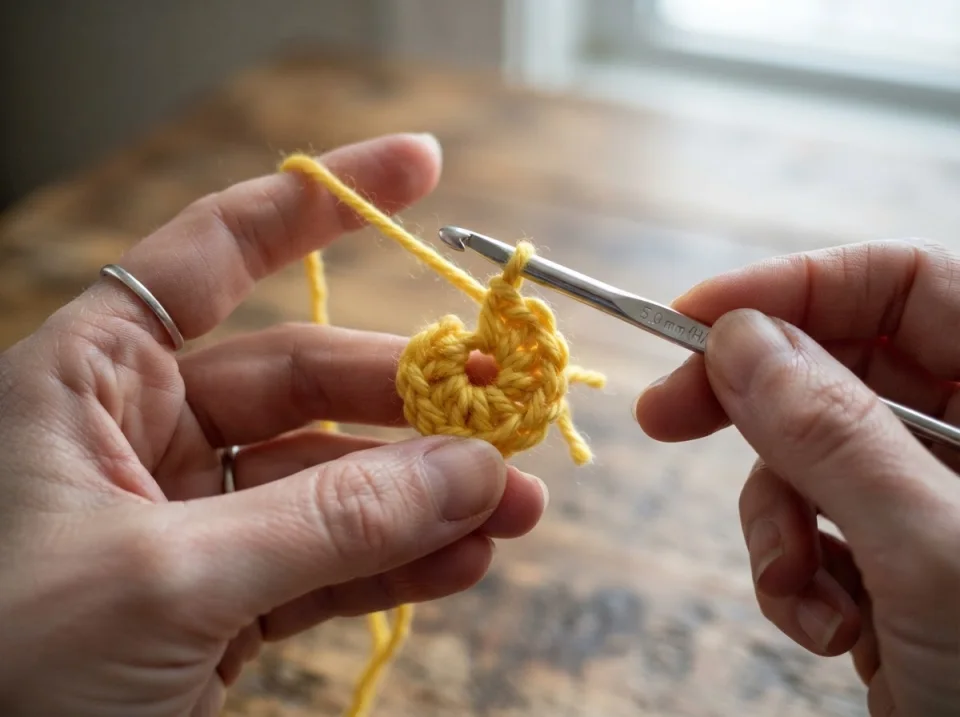
Petal round — one formula
In each center stitch work a petal group such as (sl st, ch 2, 2 dc, ch 2, sl st) or (sc, hdc, dc, hdc, sc). Six petals for six center stitches. If petals overlap too much, use shorter groups (hdc instead of dc). If gaps show between petals, add a chain between groups or use taller stitches.
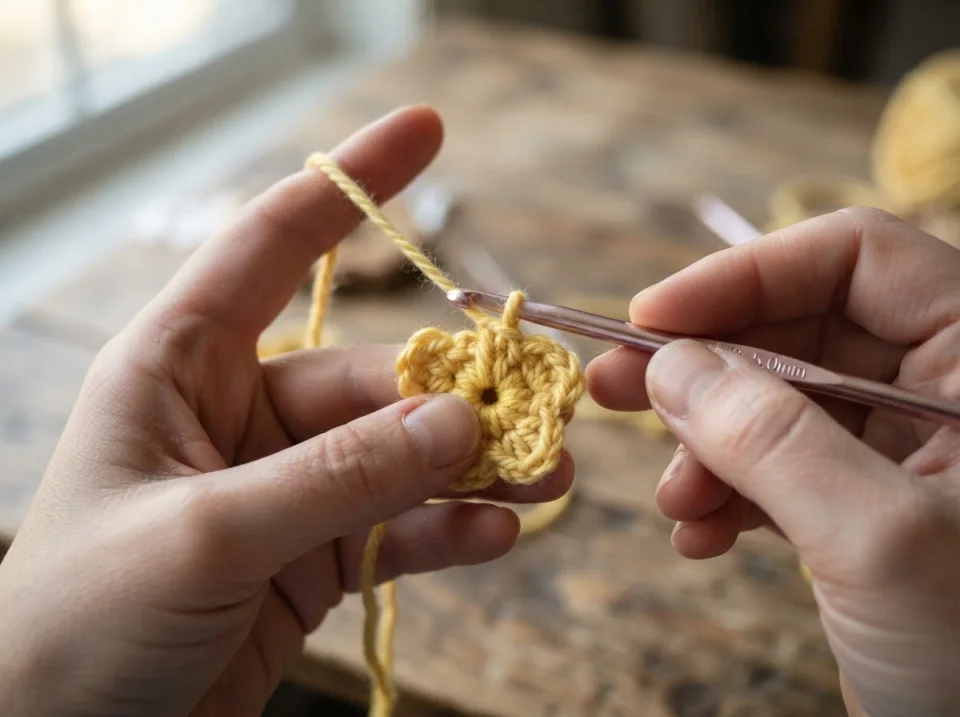
Make a dozen without boredom
Change only petal color; keep the same center count and petal formula so a garland matches. Time the third flower, not the first — five minutes is a target after the motion is learned.
Sew-on tips
Attach with stitches through the center only so petals float. For washable garments, sew through petal bases too or they catch and tear.
Failures
- Center hole: unlocked magic ring
- Petals twist: worked only into one loop of center — use both loops or deliberately BLO for a ridge
- Cupping flower: too many tall stitches in each petal — shorten
Rewrite notes for makers using this page
This tutorial was rewritten on the same URL so search indexing stays intact. The structure is built around the decisions this project actually forces — sizing, fiber, order of assembly, and failure modes — not a shared template used on every page of the site.
Count stitches at the end of every round or row until the motion is automatic. Markers at the start of rounds are cheaper than frogging a finished piece. If a number in the pattern and the number in your hands disagree, stop and find the error before the next increase round locks it in.
Record yarn brand, hook size, and finished measurements when you succeed. Weight-class labels vary by brand; your note beats guessing next month. Wash or wear-test before gifting whenever the item will leave your house.
Comments that help others include yarn name, hook size, which section failed, and what fixed it. If your gauge differs from the ranges here, report stitches per four inches — that data improves the next revision.
#crochet flower #5 minute crochet #beginner crochet #quick crochet project #scrap yarn #crochet embellishment
Comments
No comments yet. Questions, corrections, and notes from your own attempt are welcome.