
Amigurumi · Intermediate
How to Crochet a Unicorn: A Step-by-Step Guide for a Little Bit of Magic
Learn how to crochet a unicorn with this detailed, friendly tutorial. We'll walk through shaping the head, adding the horn, and attaching the mane, with plenty of tips for beginners and beyond.
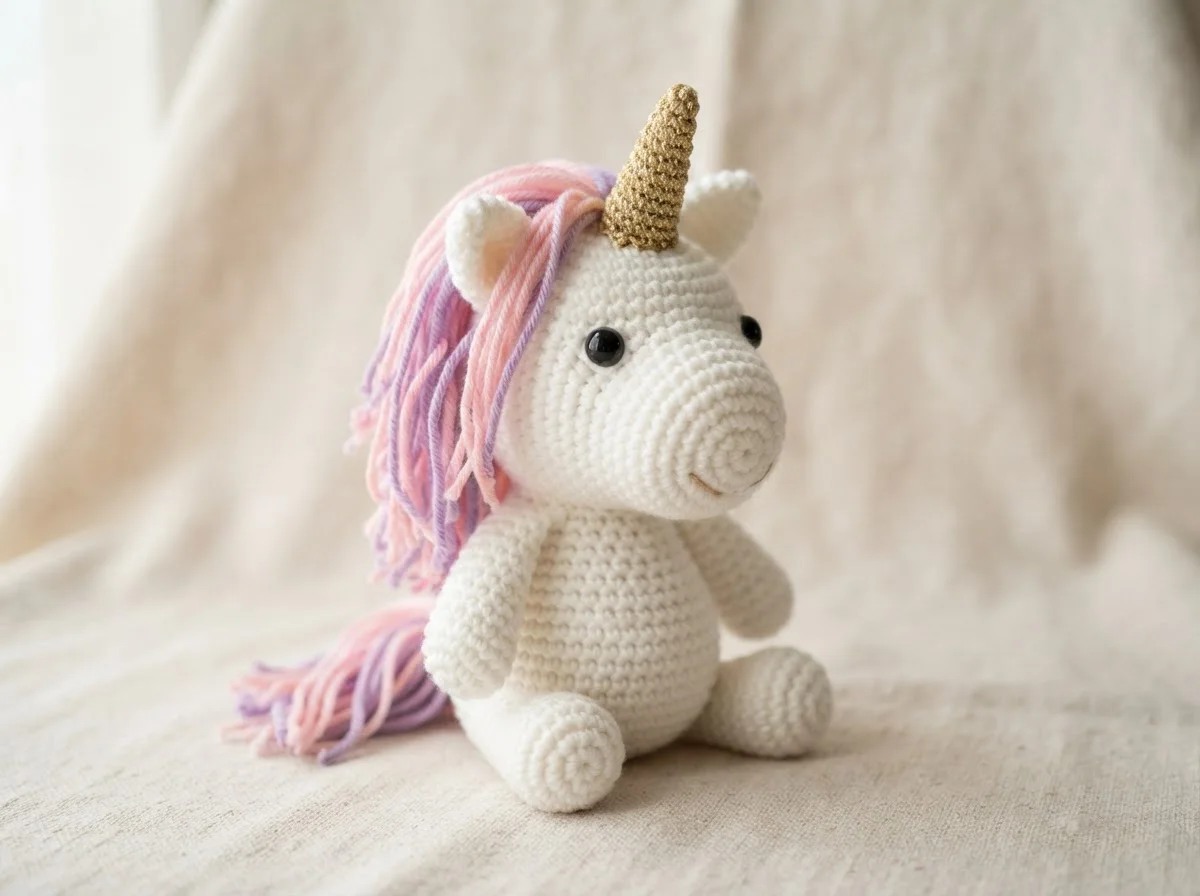
A small unicorn amigurumi is a sphere head, oval body, legs, ears, horn, and mane — assembly order matters more than any single round. Make both ears and all legs before sewing so pairs match. Embroider eyes for baby gifts; safety eyes only for ages 3+.
Yarn and size
- Worsted main color ~60–80 yd; mane/tail scraps; gold/cream for horn ~5 yd
- Hook 3.0–3.5 mm; fill; markers; needle
- Sitting height often ~5–6 inches depending on leg length
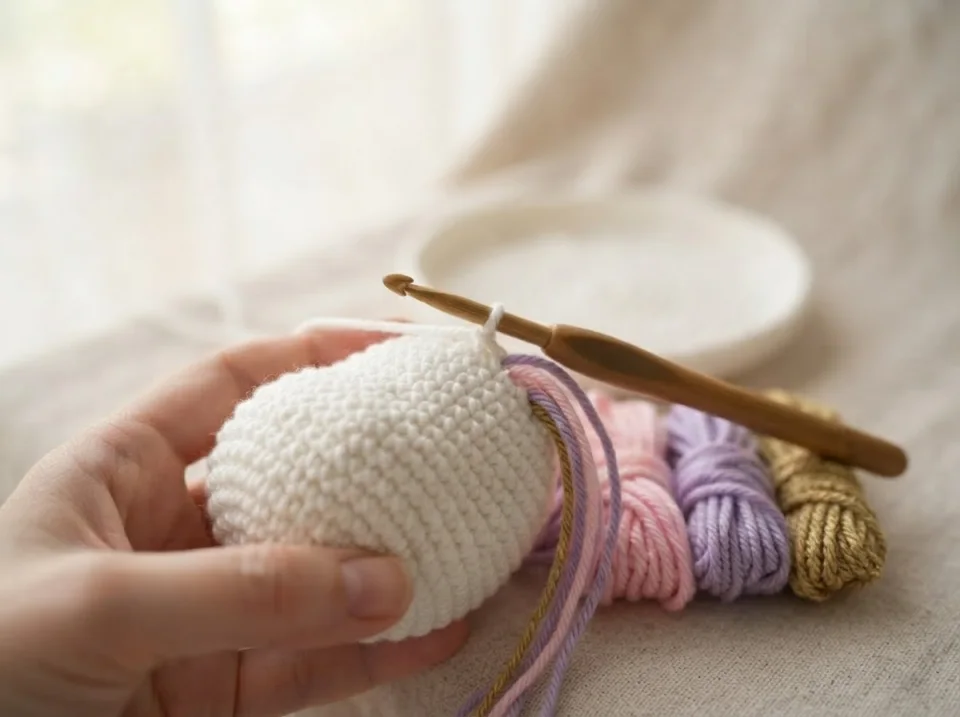
Head and body as separate firm shapes
Head: sphere to 30–36 sc around, even rounds, decrease, stuff hard at the cheeks. Body: taller oval — more even rounds in the middle than a sphere. Stuff firmly so the neck join does not wobble.
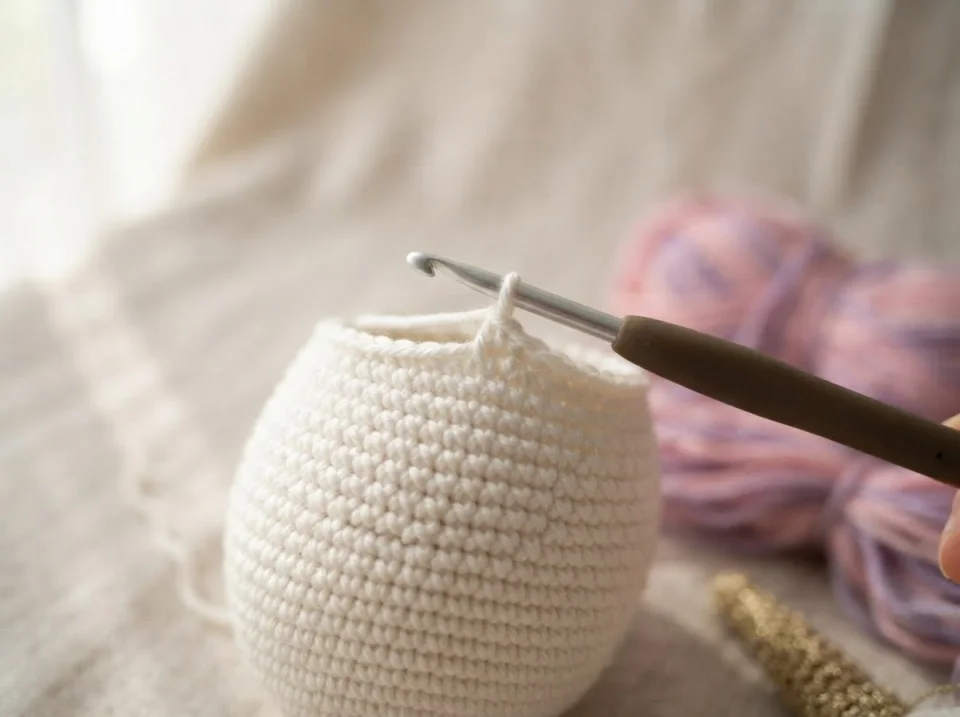
Legs, ears, horn — batch white parts
Legs: four tubes of 8–10 sc, 6–10 rounds; stuff lightly so they bend when seated. Ears: flat half-ovals. Horn: narrow cone in spiral, stuff with yarn tails, sew at forehead center before the mane hides the joint.
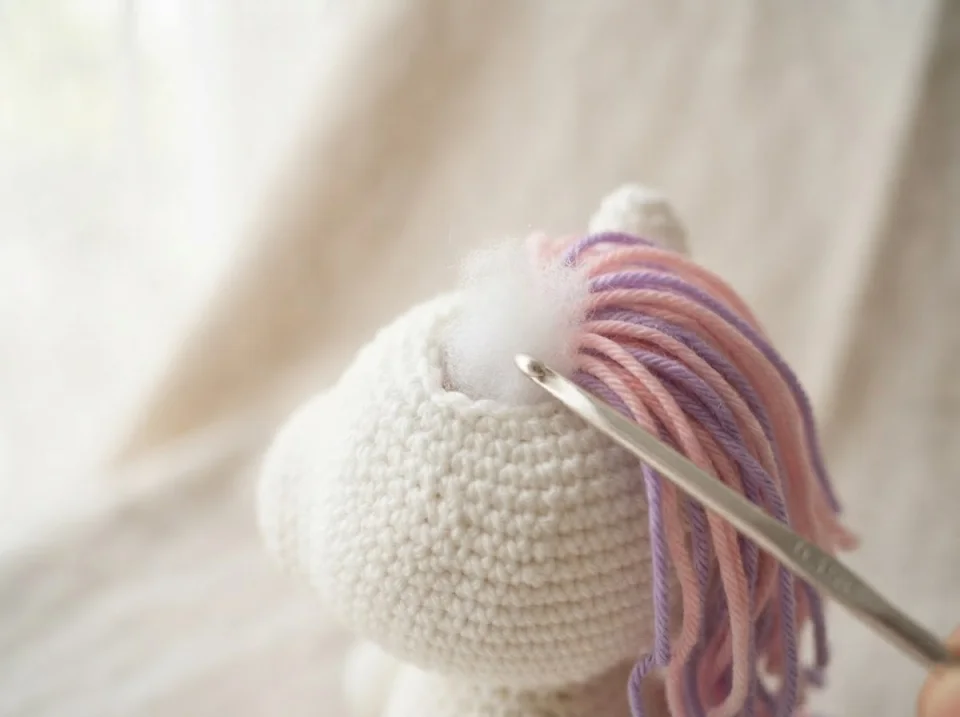
Mane and face
Cut fringe lengths or crochet chain loops along the head midline and neck. Sew eyes aligned with the horn base. Pink cheek embroidery optional — keep light so it does not look bruised.
Assembly sequence
- Head details (horn, ears, eyes) while you can still reach
- Legs to body; sit test on a table
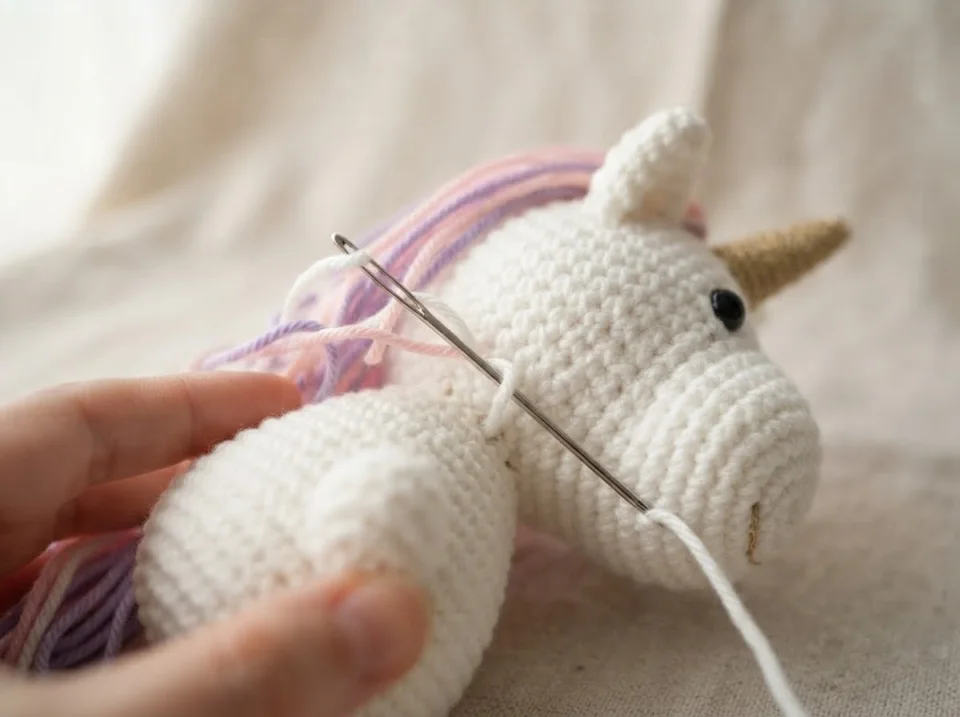
- Head to body with strong ladder stitch; add fill at the neck if hollow
- Mane/tail last
Failures
- Wobbly head: sparse neck stitches or soft stuffing
- Horn leans: sewn on after mane — sew horn first
- Tripod sit: leg lengths differ — remake the short pair
Rewrite notes for makers using this page
This tutorial was rewritten on the same URL so search indexing stays intact. The structure is built around the decisions this project actually forces — sizing, fiber, order of assembly, and failure modes — not a shared template used on every page of the site.
Count stitches at the end of every round or row until the motion is automatic. Markers at the start of rounds are cheaper than frogging a finished piece. If a number in the pattern and the number in your hands disagree, stop and find the error before the next increase round locks it in.
Record yarn brand, hook size, and finished measurements when you succeed. Weight-class labels vary by brand; your note beats guessing next month. Wash or wear-test before gifting whenever the item will leave your house.
Comments that help others include yarn name, hook size, which section failed, and what fixed it. If your gauge differs from the ranges here, report stitches per four inches — that data improves the next revision.
#amigurumi #unicorn #crochet pattern #intermediate crochet #stuffed animal #handmade gift
Comments
No comments yet. Questions, corrections, and notes from your own attempt are welcome.