
Wearables · Easy
How to Crochet a Pet Bandana That Ties Safely
A cozy, custom bandana for your furry friend that stays put without choking. Learn how to crochet a neat single crochet triangle with soft, integrated safety ties.
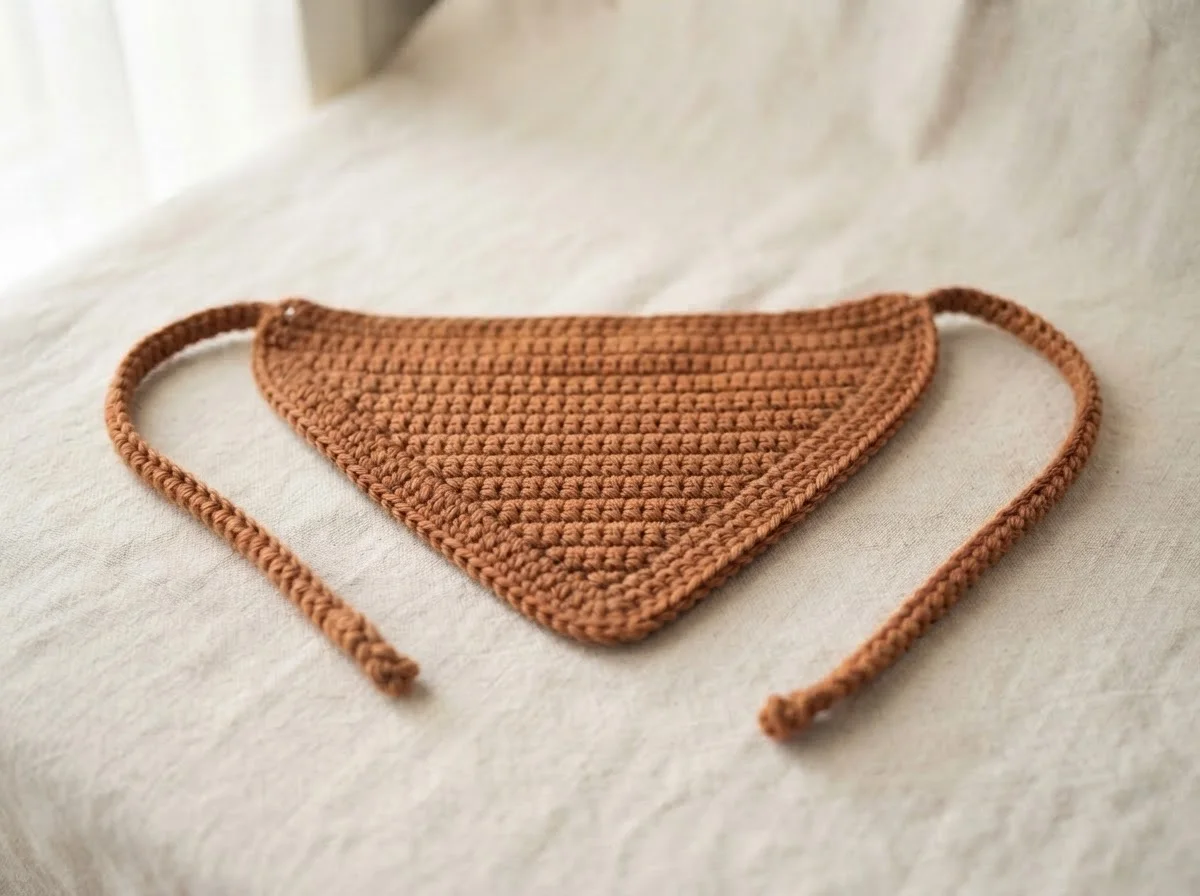
A pet bandana that ties safely uses wide flat ties and a dense cotton triangle — not thin cords that cinch like a garrote. Size from the animal’s neck measurement with room to slip two fingers under the tied bandana.
Measure the neck, then pick a size band
- Cat / small dog neck 8–12 in → starting chain ~ smaller triangle
- Medium dog 14–18 in → medium
- Large 18–22 in → large; always re-measure the real pet
- Worsted cotton ~60–120 yd; hook 4.0–5.0 mm; needle
Ties should be flat ribbons of single crochet, not chains alone. Aim for ties long enough to square-knot beside the neck with short ends — not trailing loops that catch on crates.
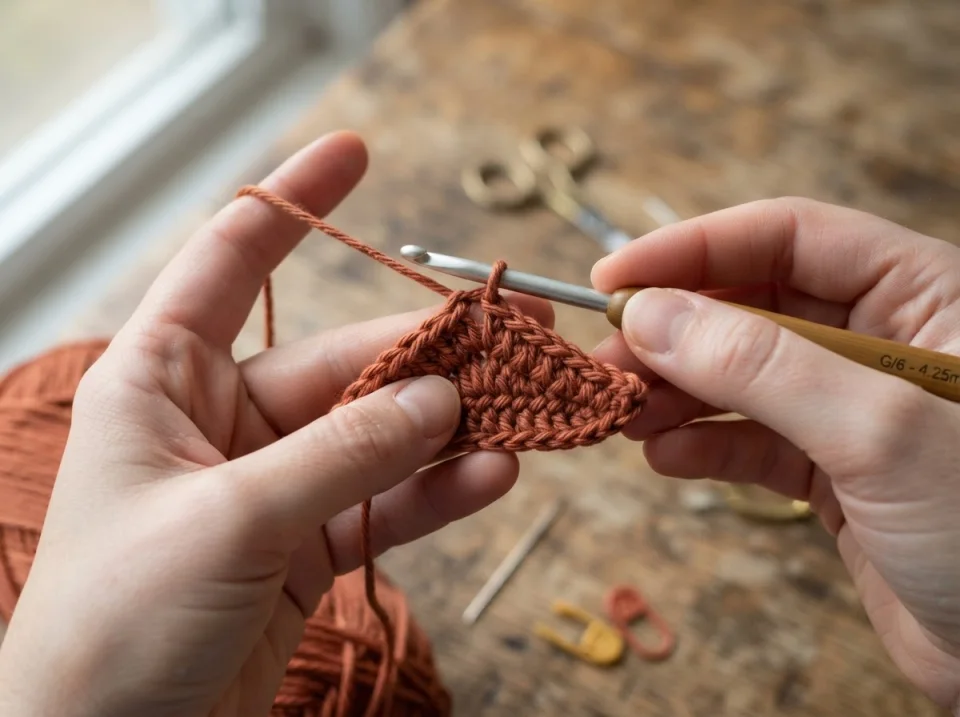
Triangle from the point up
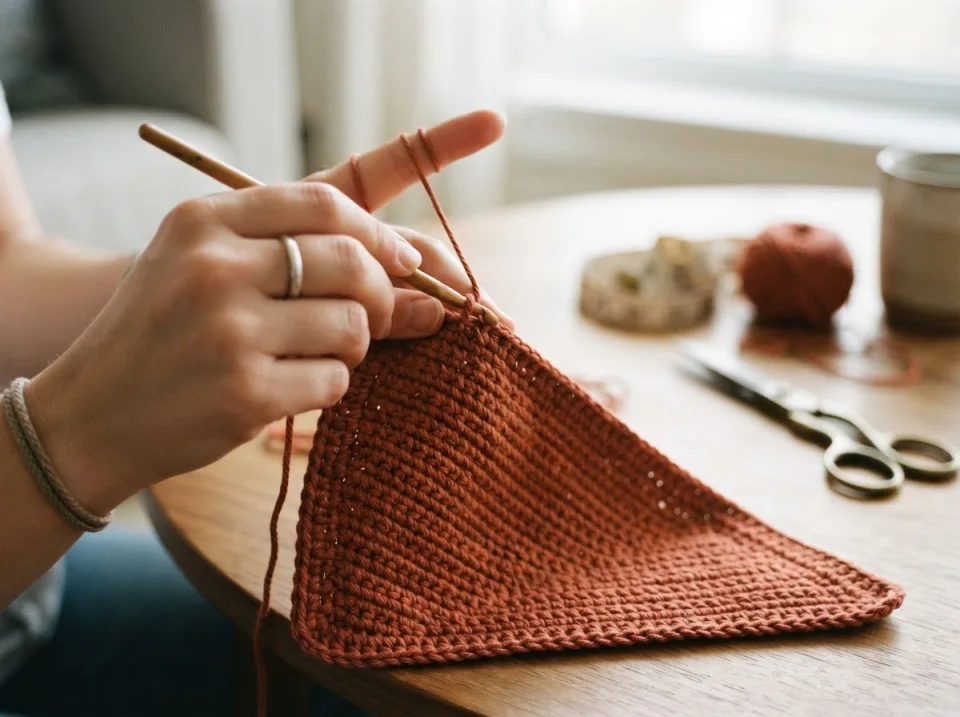
Begin at the bottom point: few stitches, increase at both edges every row until the top edge matches the neck arc plus tie bases. Keep edge increases symmetric or the triangle skews and sits crooked on the chest.
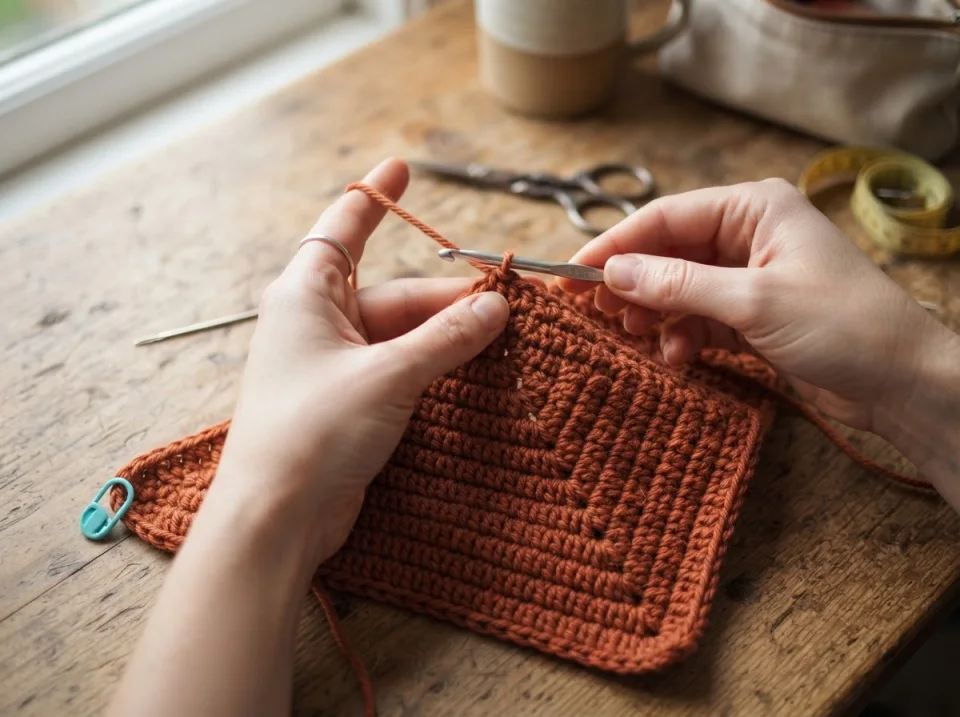
Integrated flat ties
At the top corners, work rows of sc sideways to form straps about ¾–1 inch wide and long enough to tie. Dense cotton straps distribute pressure better than i-cord. Weave ends thoroughly — pets chew loose tails.
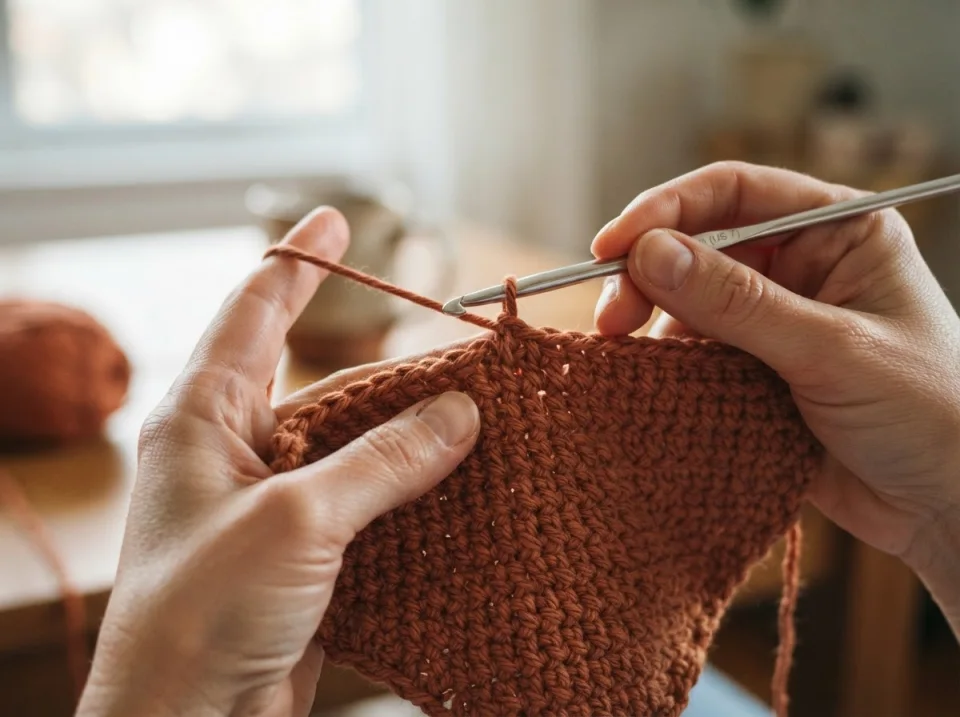
Safety rules that override aesthetics
- Never leave a pet unsupervised in a tied bandana
- Breakaway buckles are safer for unsupervised wear — sew one in if the pet is alone often
- No beads, bells on long strands, or choking-size charms for chewers
- Two-finger rule under the tied fabric
Wash and fit test
Tie on for five supervised minutes. Check for rubbing at the knot. Wash cotton once before heavy use so dye and sizing settle; retie after wash — cotton can shrink slightly.
Failures
- Slides to one side: asymmetric increases
- Cuts in: ties too thin or tied too tight — wider straps, looser knot
- Curls into a tube: tight tension — larger hook or block damp
Rewrite notes for makers using this page
This tutorial was rewritten on the same URL so search indexing stays intact. The structure follows the real decisions of this project — sizing, fiber, order of work, and failure modes — not a shared sitewide template.
Count at the end of every round or row until counting is automatic. Markers beat memory. Record yarn brand, hook, and finished size when you succeed. Wash or wear-test before gifting when the item will leave your house.
Helpful comments include yarn name, hook size, which section failed, and what fixed it. If your gauge differs, report stitches per four inches.
#How to Crochet a Pet Bandana That Ties Safely #crochet tutorial #step by step
Comments
No comments yet. Questions, corrections, and notes from your own attempt are welcome.