Baby & Kids · Intermediate
Crochet Chick Keychain with Removable Strawberry Bonnet
Learn how to crochet an adorable amigurumi baby duckling keychain complete with tiny webbed feet, little wings, and a cozy removable bonnet with strawberry leaves.
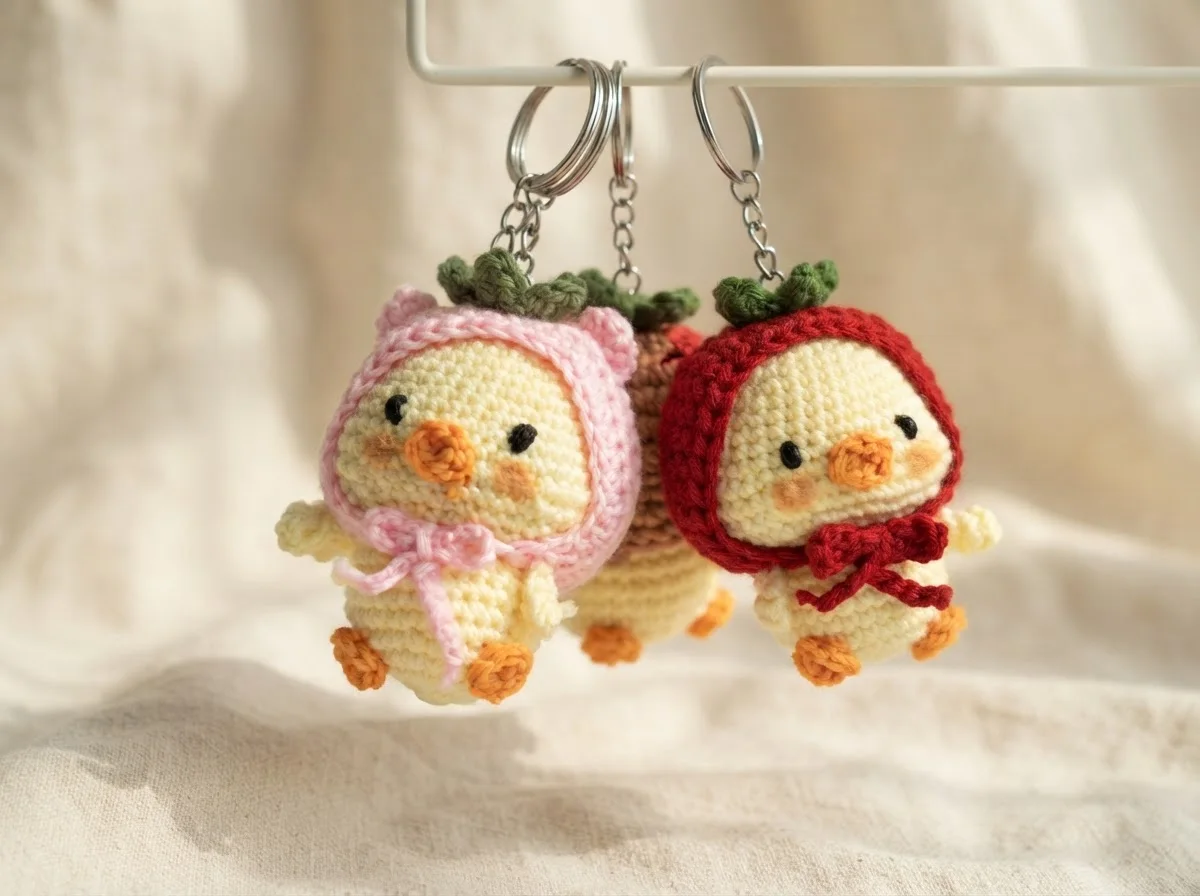
A chick keychain with a removable strawberry bonnet only works if the bonnet opening matches the chick’s head and the keyring attachment cannot unravel under bag weight. Work the chick first, measure the head, then size the bonnet — not the other way around.
Materials for a hard-wearing charm
- DK or worsted cotton/acrylic: yellow ~20 yd, red/green for bonnet ~15 yd, tiny orange for beak
- Hook 2.5–3.5 mm for dense fabric
- 6–8 mm safety eyes (age 3+) or embroidered eyes; fiberfill; keyring + jump ring; tapestry needle
- Finished chick roughly 2–2.5 inches tall without bonnet
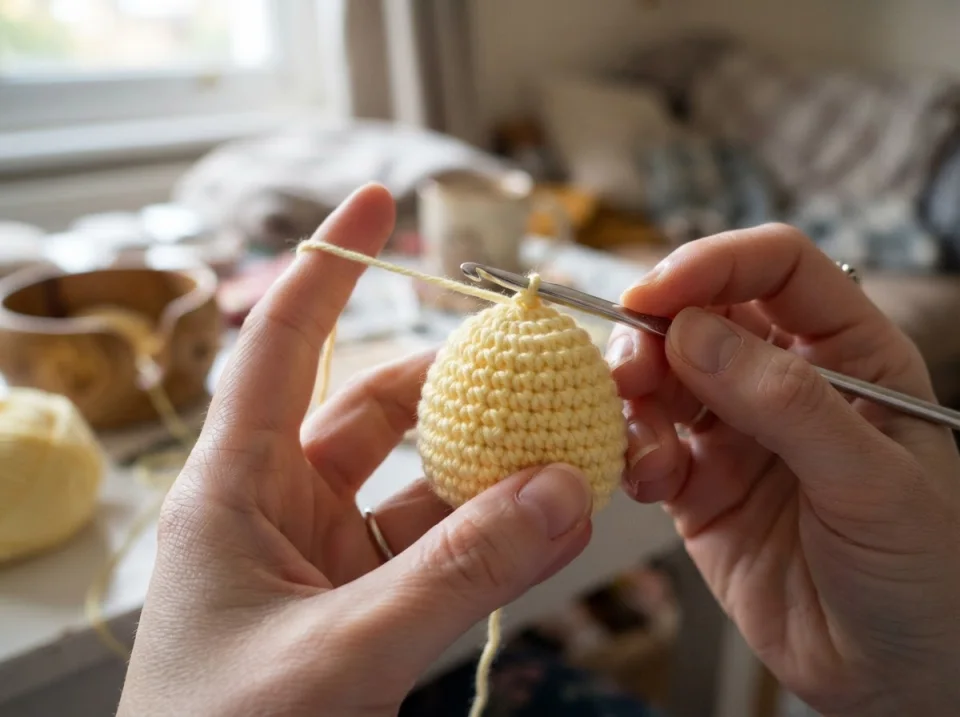
Chick body — sphere that becomes a head-heavy charm
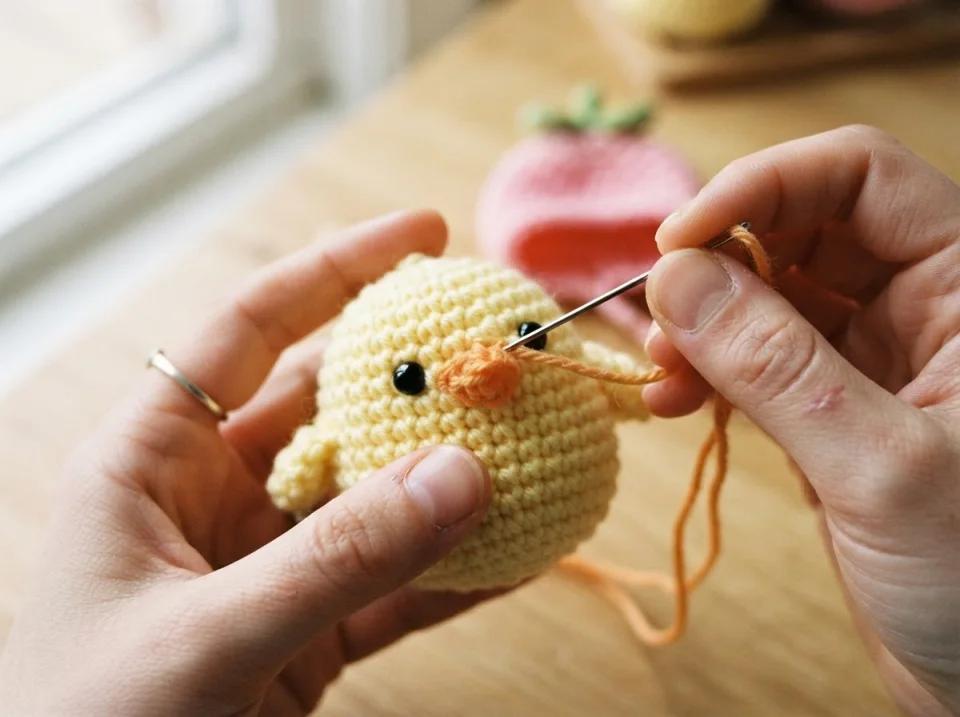
Magic ring 6 sc, increase to 12, 18, 24. Even rounds for the belly, then decrease to close while stuffing firmly. A slightly oversized head (more even rounds before decreases) reads as a chick; a perfect sphere reads as a ball. Embroider or attach beak at the midline before the opening is tiny.
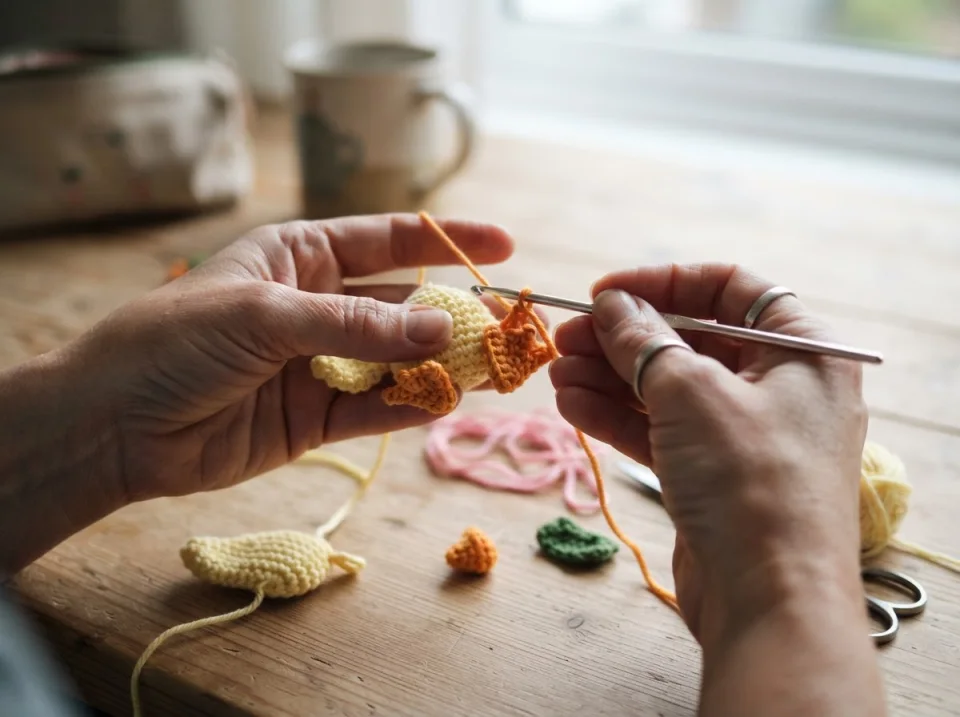
Strawberry bonnet — removable on purpose
Work a small red half-sphere or short tube that slips over the head with mild friction — about the head circumference in stitches, depth ~½–¾ inch. Add green leaf points at the top (chains and slip stitches). Do not sew the bonnet on if the design calls for removable; test fit dry before adding leaves so you can frog the opening size.
Keyring attachment that survives keys
Thread a jump ring through several crochet stitches at the crown (under the bonnet when worn), not through a single loop. Pull test with the full key set. Reinforce with a second pass of yarn if the fabric stretches.
Safety and gift notes
Embroider faces for under-3 gifts. Removable bonnets are choking-size — keep for older kids or adult bags. Name the fiber content for washers: spot-clean stuffed charms; do not machine-dry.
Fit failures
- Bonnet falls off: opening too wide — reduce stitch count one round
- Bonnet will not go on: opening too small or head overstuffed — ease fill or add 2–3 stitches
- Neck stretches at ring: attachment through too few stitches — restitch through a denser patch
Rewrite notes for makers using this page
This tutorial was rewritten on the same URL so search indexing stays intact. The structure is built around the decisions this project actually forces — sizing, fiber, order of assembly, and failure modes — not a shared template used on every page of the site.
Count stitches at the end of every round or row until the motion is automatic. Markers at the start of rounds are cheaper than frogging a finished piece. If a number in the pattern and the number in your hands disagree, stop and find the error before the next increase round locks it in.
Record yarn brand, hook size, and finished measurements when you succeed. Weight-class labels vary by brand; your note beats guessing next month. Wash or wear-test before gifting whenever the item will leave your house.
Comments that help others include yarn name, hook size, which section failed, and what fixed it. If your gauge differs from the ranges here, report stitches per four inches — that data improves the next revision.
#amigurumi #keychain #crochet chick #cute crochet #crochet patterns
Comments
No comments yet. Questions, corrections, and notes from your own attempt are welcome.