
Baby & Kids · Easy
How to Crochet a Soft Baby Bonnet with Ties
A sweet, vintage-inspired bonnet that keeps tiny ears warm and stays put with gentle ties. This tutorial walks you through every stitch, from the first chain to the last little bow.
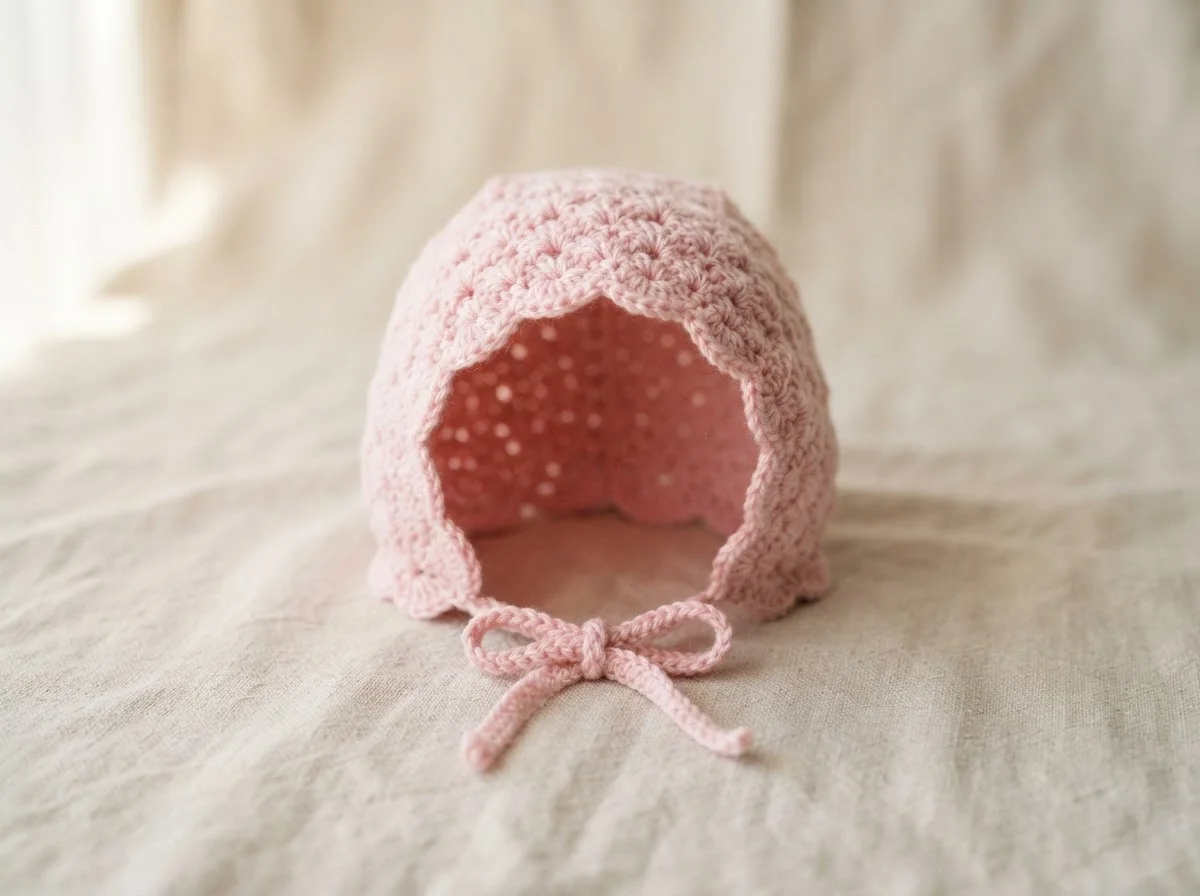
A newborn bonnet should frame the face without sliding over the eyes or leaving red marks from tight ties. This pattern is a newborn size (about 13–14 inch head circumference) worked from the back of the head forward in soft DK or light worsted, with ties long enough to knot safely without trailing cords.
Size, yarn, and safety
- Finished head band: ~13–14 inches around for newborn; check against a soft tape
- Yarn: soft DK or light worsted, machine-washable — ~80–100 yards
- Hook: 4.0 mm (G/6); size up if the fabric feels stiff
- Notions: markers, tapestry needle
- No buttons or beads. Ties shorter than a hazard length when tied — keep each tie about 8–10 inches and stitch them on firmly
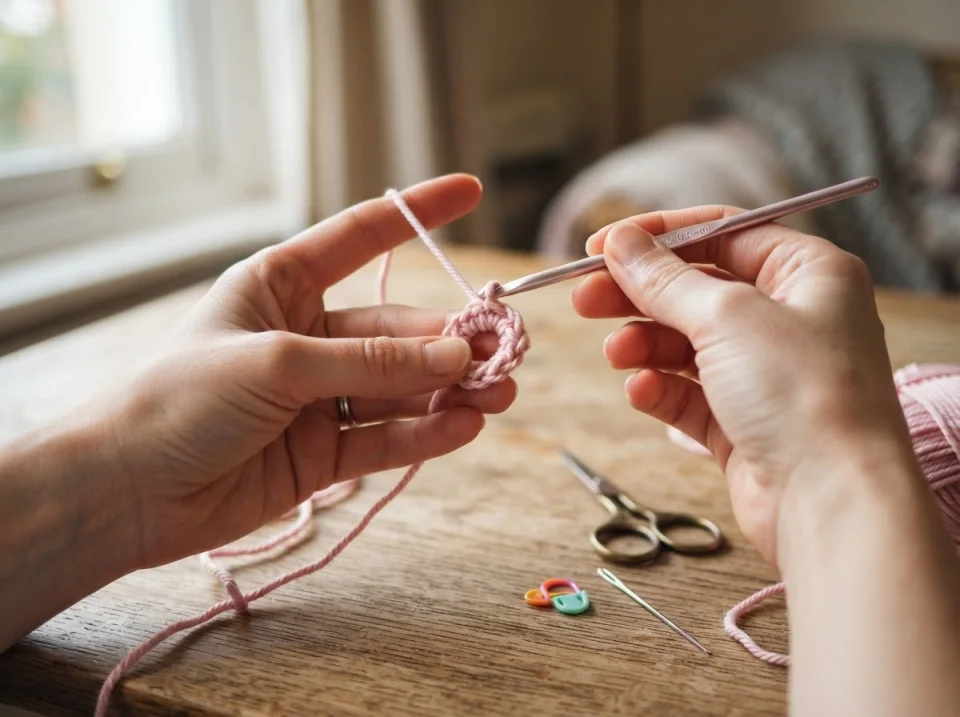
Crown — flat circle that becomes the back of the head
Magic ring, 8 hdc in ring (or 8 sc if you prefer a denser crown). Increase evenly every round until the circle measures about 4 inches across — typically ending near 40–48 hdc depending on gauge. Stagger increases so the crown does not hexagon.
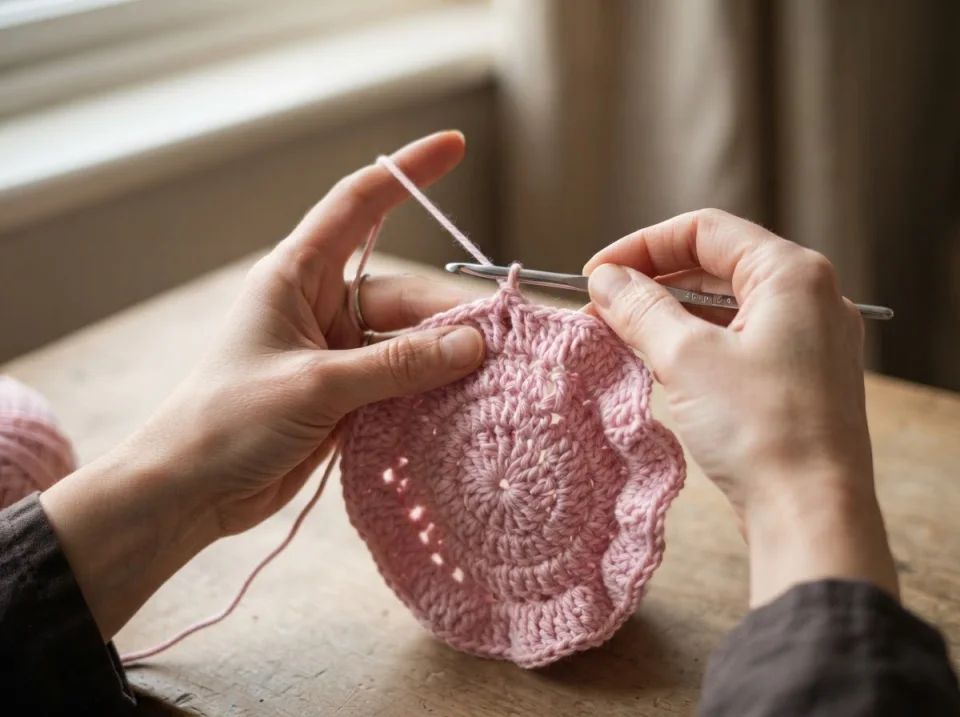
Body — work even, then leave the neck edge
Work even rounds or rows across only the upper portion so the bottom opens for the neck. A common approach: continue in rows across about two-thirds of the stitches, turning, until the depth from crown center to front edge reaches about 5 inches. Try on a doll head or soft ball of the right circumference as you go.
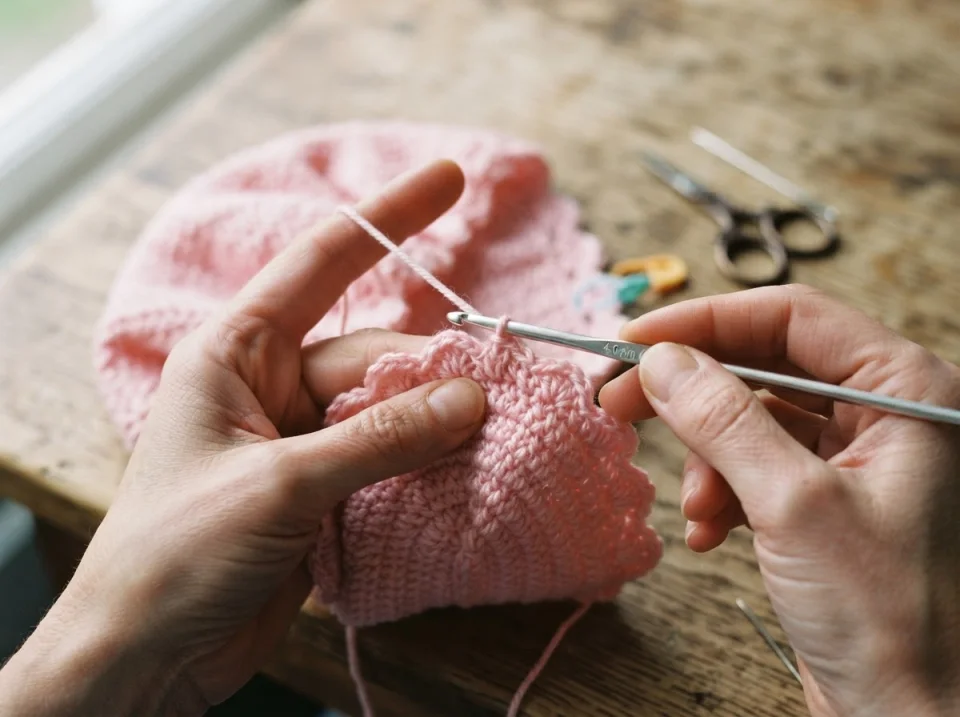
Face edge and ties
Work a tidy sc edging around the face opening. At each lower corner, attach a chain tie of about 40–50 chains (measure 8–10 inches), then slip stitch back along the chain or leave as a twisted cord. Weave the attachment through several stitches so a tug cannot pull a single loop free.
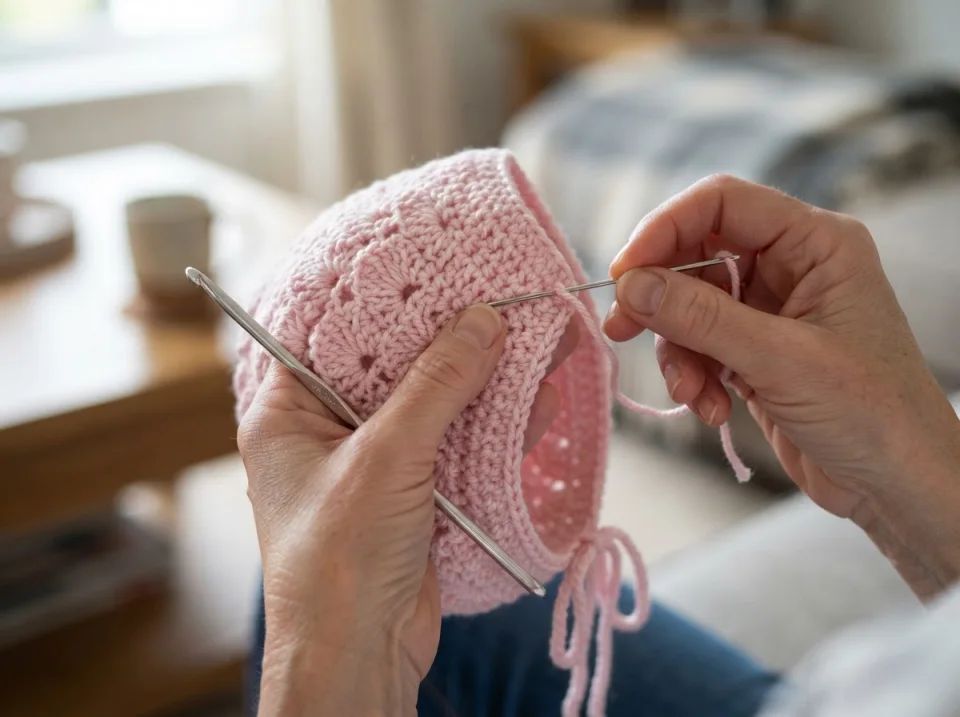
Fit checks
- Front edge sits at the hairline, not mid-forehead into the eyes
- Neck edge allows the bonnet to put on without stretching yarn to breaking
- Ties knot under the chin with short leftover ends
When to resize
For 0–3 months beyond newborn, add one increase round on the crown and one even section in the body. Recheck measurements; baby heads vary more than pattern sizes imply.
Quality bar for this rewrite
This tutorial was rewritten in place to replace generic AI-pattern structure with specific teaching: numbers you can measure, mistakes you can diagnose, and a section order unique to this skill. Keep the URL unchanged so search indexing stays intact. If you bookmarked this page before, you are in the same place with clearer instructions.
Work under good light with a light-colored swatch yarn when a step is new. Dark variegated yarn hides the exact loop you need to enter. When a count is written, count out loud until the motion is automatic. Silent guessing is how pairs stop matching and circles become hexagons.
Frogging is a tool, not a failure. Unravel to the last correct stitch marker and resume. Leaving a known error “because it is only one stitch” teaches the fabric to spiral out of true for the rest of the piece. Markers at the start of rounds and rows are cheaper than ripping a finished cuff.
Record hook size, yarn brand and colorway, and finished measurements in a note on your phone when you succeed. Future you will not remember which 5.0 mm hook and which “worsted” made the good sample. Brand differences inside the same weight class are real.
Wash or wear-test anything that will leave your house. Techniques that only work on the coffee table are incomplete. For garments and baby items, check seams, ties, and woven ends after the first wash before you call the project done.
Comments that help other makers include yarn name, hook size, which section failed, and what fixed it. “Help” with no details cannot be answered well. If a measurement range here does not match your gauge, say what you got for four inches — that data improves the next revision.
Prerequisites mentioned in the text are not decoration. If a step assumes a magic ring, post stitches, or invisible decrease, practice that skill on scrap first. Most “this pattern is impossible” moments are missing prerequisites, not missing talent.
#baby bonnet #crochet baby hat #easy crochet #baby accessories #handmade gift #DK weight yarn
Comments
No comments yet. Questions, corrections, and notes from your own attempt are welcome.