
Stitches · Intermediate
How to Change Colors in the Round Without a Jog: A Clean Finish Every Time
Tired of that annoying jog when you change colors in the round? This tutorial walks through a reliable method for a seamless color change that looks like you're a crochet wizard.
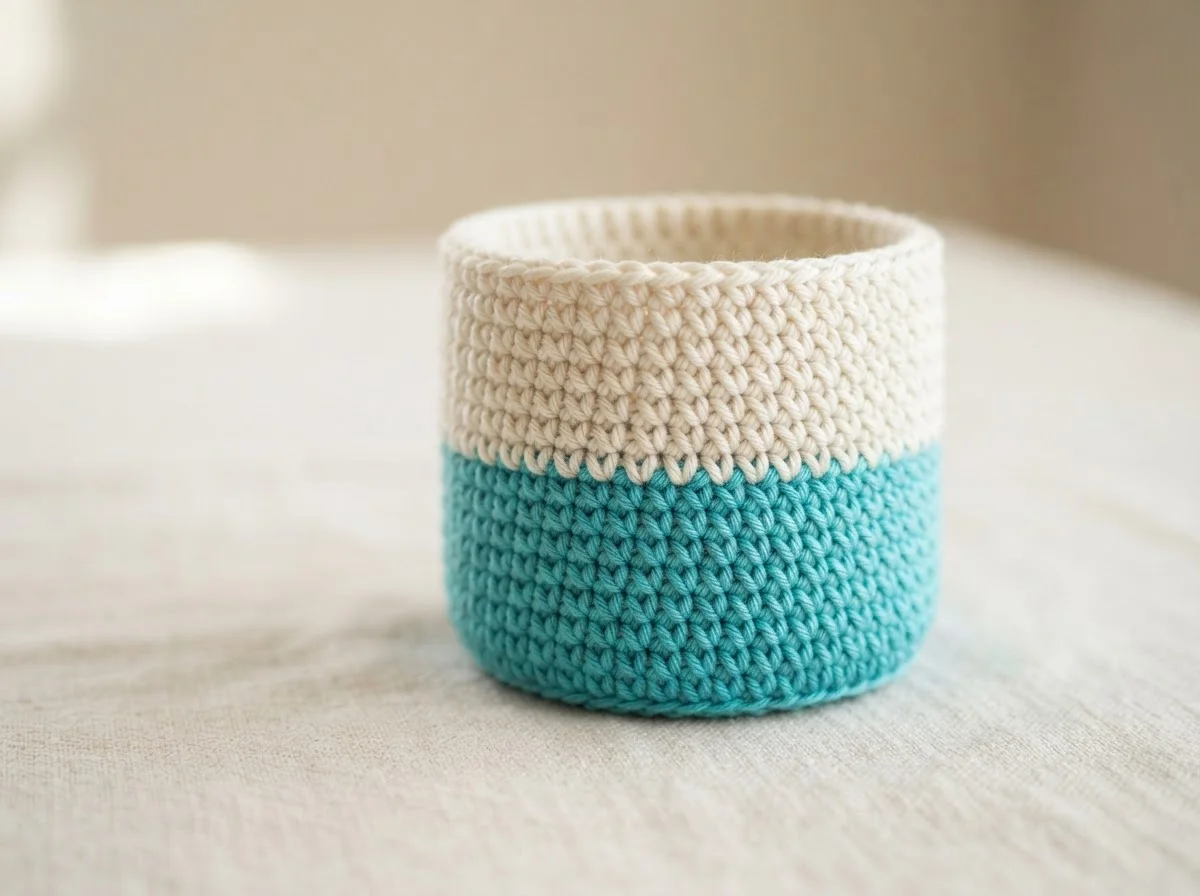
A color jog is the stair-step where a new color starts in joined or spiral rounds. You did not fail at crochet — the geometry of a helix shows the join. This tutorial covers the jogless join for stripes in the round, when to cut vs carry, and how to hide the transition on amigurumi and hats.
See the jog on purpose
Crochet a tube of 24 sc in color A for 3 rounds, change to B in the last yarn-over of the last stitch, work 3 rounds, and look at the start-of-round line. The step you see is the jog. Every fix tries to move or soften that step.
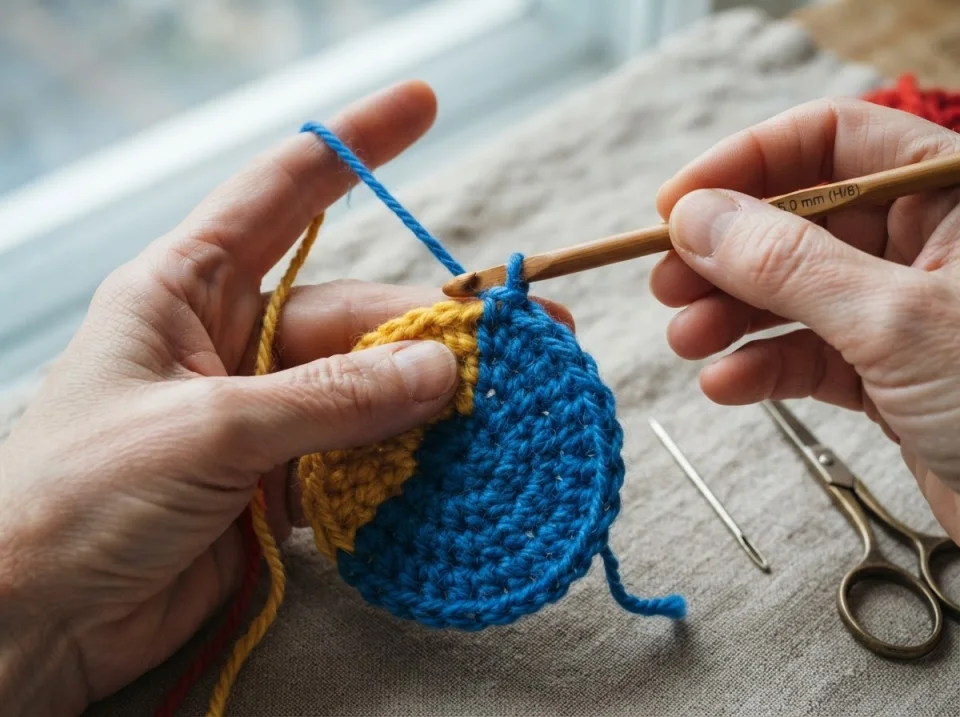
Jogless join (slip-stitch lift)
After the first round of the new color, slip stitch into the first stitch of that new-color round (some makers slip into the stitch below the first new stitch — follow one method consistently). This pulls the first stitch up to match the round height. Then continue. It softens, not erases, the transition.
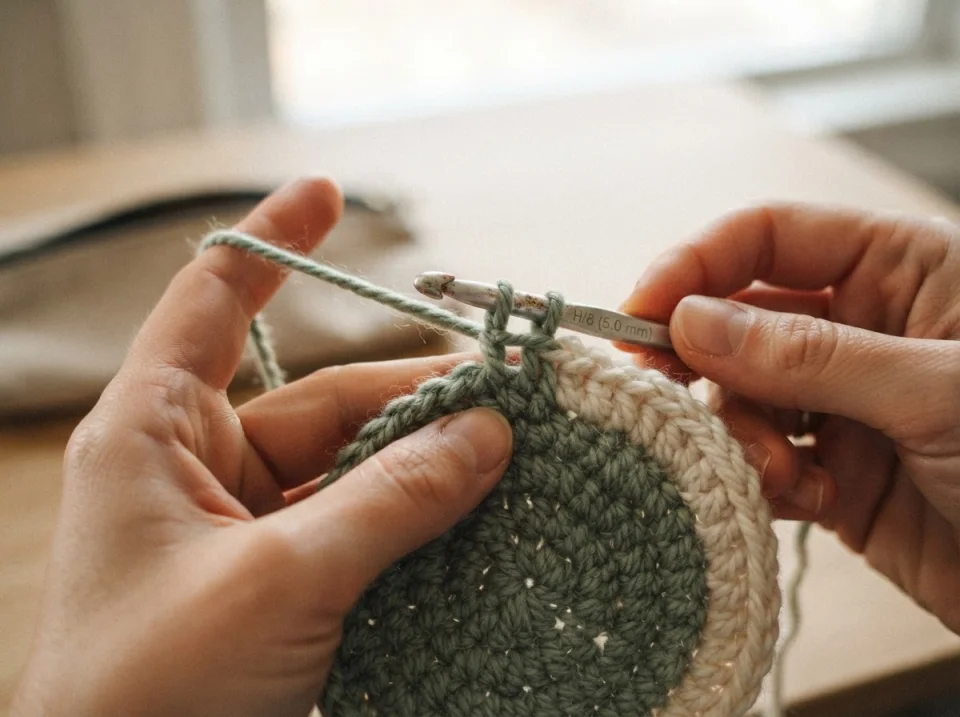
Change color in the last pull-through
Always introduce the new color on the last yarn-over of the last stitch of the old color. Starting a new color with a knot at the edge creates a thicker jog and a weak join.
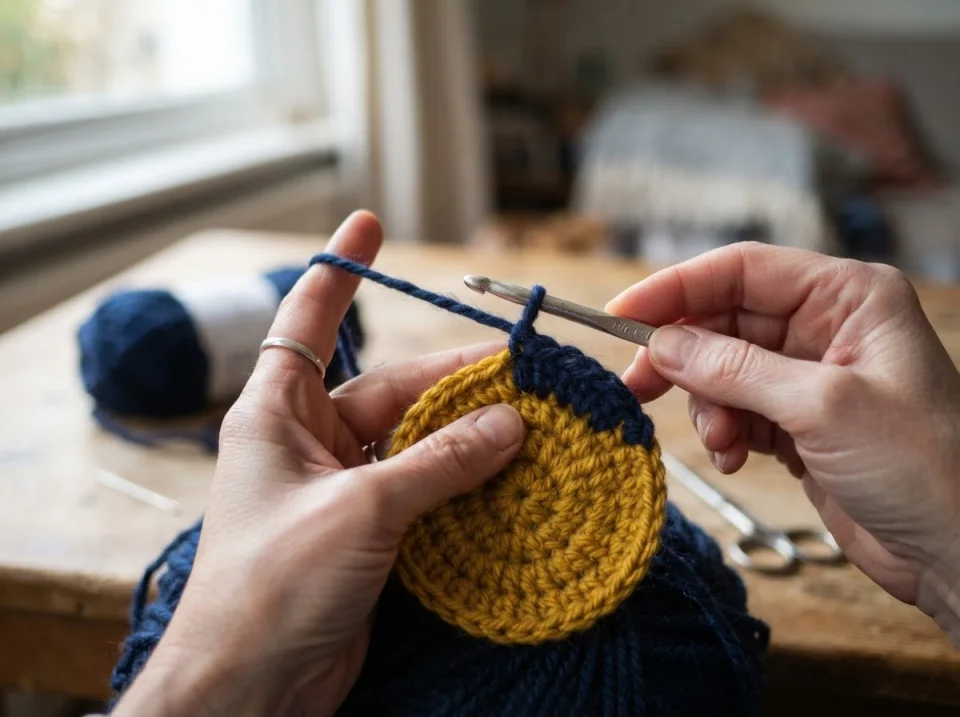
Spiral vs joined rounds
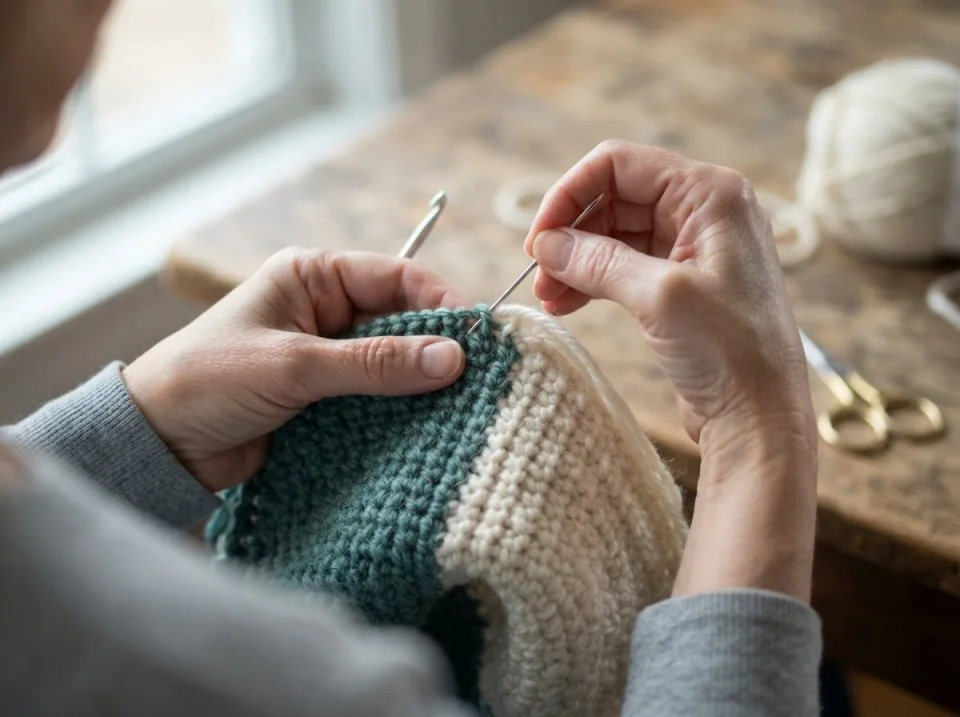
Amigurumi spirals show a diagonal color line; floating the new color and using the jogless slip on a “fake join” can help for stripes. Joined rounds with a chain-up show a vertical seam — place that seam under the arm or at the back of a hat.
Carry or cut?
Carry unused yarn only a few stitches if the carry stays inside and does not show. Long carries on a hat brim look like bumps. For wide stripes, cut and weave — cleaner fabric.
Troubleshooting
- Step still obvious: try the slip-stitch lift one stitch earlier/later; block lightly
- Hole at change: tension of the first new stitch too loose
- Thick bump: too many carried yarns — cut and weave instead
Quality bar for this rewrite
This tutorial was rewritten in place to replace generic AI-pattern structure with specific teaching: numbers you can measure, mistakes you can diagnose, and a section order unique to this skill. Keep the URL unchanged so search indexing stays intact. If you bookmarked this page before, you are in the same place with clearer instructions.
Work under good light with a light-colored swatch yarn when a step is new. Dark variegated yarn hides the exact loop you need to enter. When a count is written, count out loud until the motion is automatic. Silent guessing is how pairs stop matching and circles become hexagons.
Frogging is a tool, not a failure. Unravel to the last correct stitch marker and resume. Leaving a known error “because it is only one stitch” teaches the fabric to spiral out of true for the rest of the piece. Markers at the start of rounds and rows are cheaper than ripping a finished cuff.
Record hook size, yarn brand and colorway, and finished measurements in a note on your phone when you succeed. Future you will not remember which 5.0 mm hook and which “worsted” made the good sample. Brand differences inside the same weight class are real.
Wash or wear-test anything that will leave your house. Techniques that only work on the coffee table are incomplete. For garments and baby items, check seams, ties, and woven ends after the first wash before you call the project done.
Comments that help other makers include yarn name, hook size, which section failed, and what fixed it. “Help” with no details cannot be answered well. If a measurement range here does not match your gauge, say what you got for four inches — that data improves the next revision.
Prerequisites mentioned in the text are not decoration. If a step assumes a magic ring, post stitches, or invisible decrease, practice that skill on scrap first. Most “this pattern is impossible” moments are missing prerequisites, not missing talent.
#crochet color change #no jog crochet #continuous rounds #amigurumi #intermediate crochet #crochet techniques
Comments
No comments yet. Questions, corrections, and notes from your own attempt are welcome.