Stitches · Beginner
How to Crochet Half Double Crochet for Soft, Fast Fabric
Half double crochet is a fast, soft stitch many beginners come back to. It's fast, it's soft, and it makes fabric that feels like a warm hug. This tutorial shows exactly how to work it, step by step, and share the little tricks that keep your edges straight and your tension even.
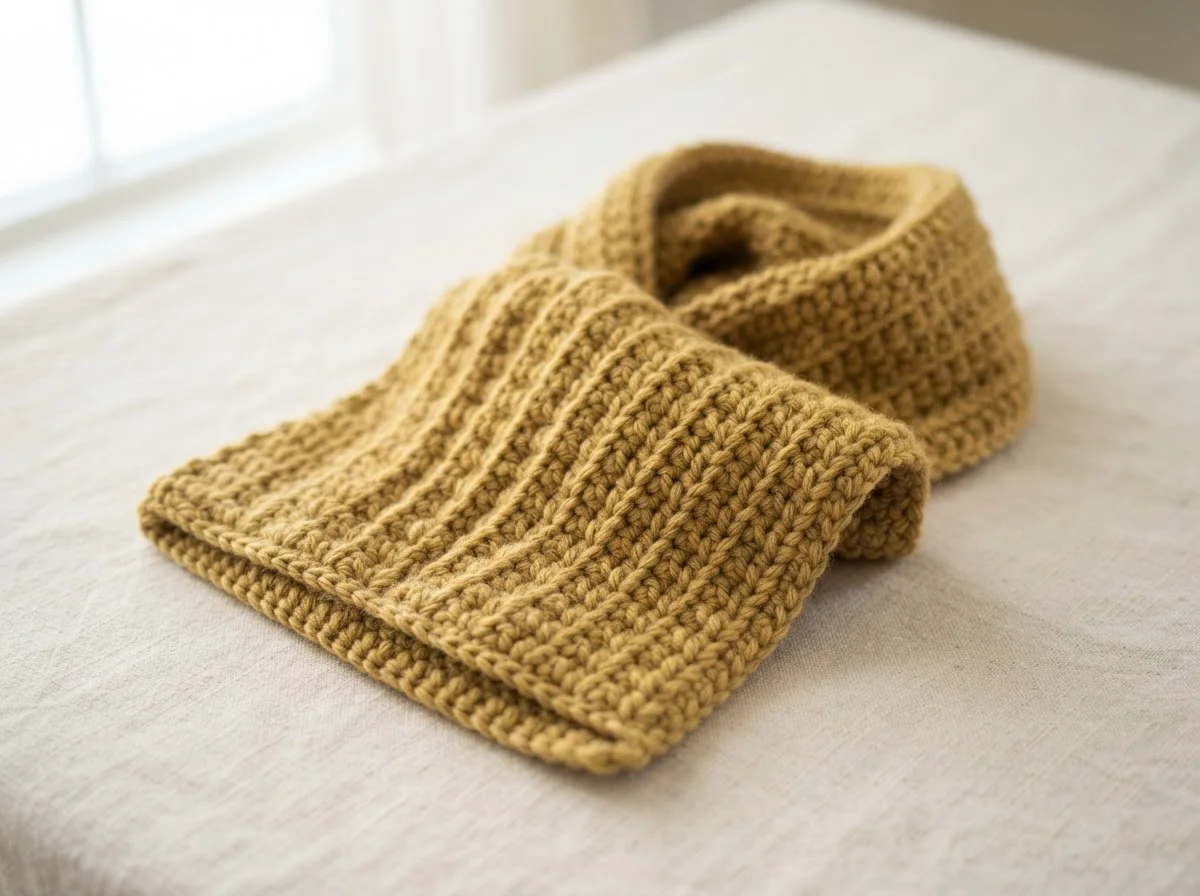
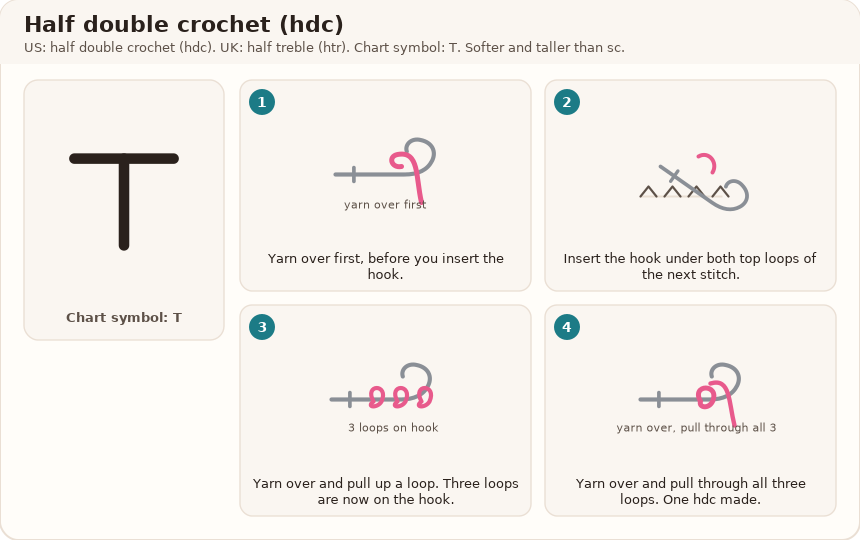
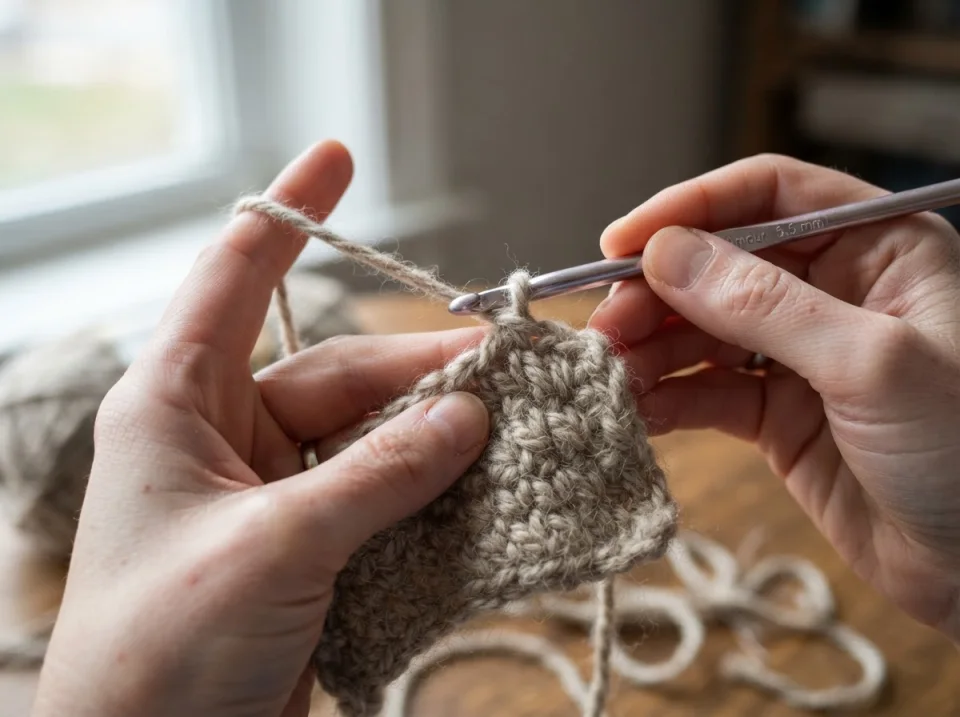
Half double crochet (hdc) sits between single and double: yarn over, insert, pull up, yarn over, pull through all three loops. The fabric is softer and faster than sc, denser than dc. This lesson builds even hdc with a measured swatch and clear turning-chain rules.
Swatch target
- Worsted yarn ~40 yd; hook 5.0 mm (H/8)
- About 14 hdc and 10–11 rows = 4 inches after a light block
- Swatch 20 stitches × 12 rows
The three-loop motion
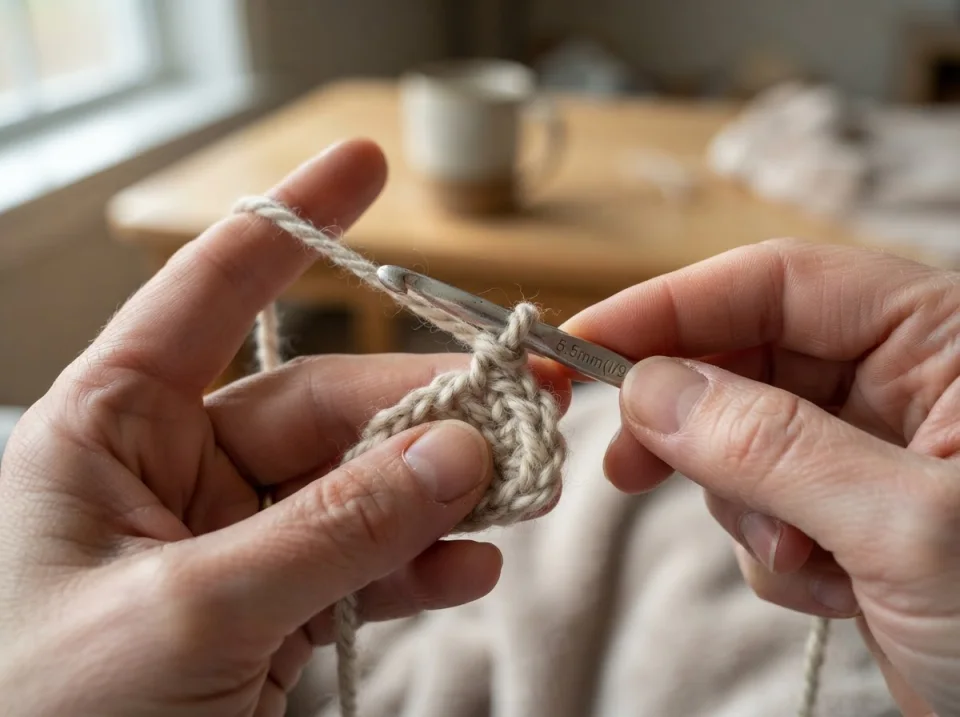
Yarn over, insert under both top loops, pull up a loop to the height of a finished hdc (about half a double), yarn over, pull through all three. If you pull through only two by habit, you accidentally make a double crochet without the last step — count loops on the hook before the final pull-through.
Turning chain choice
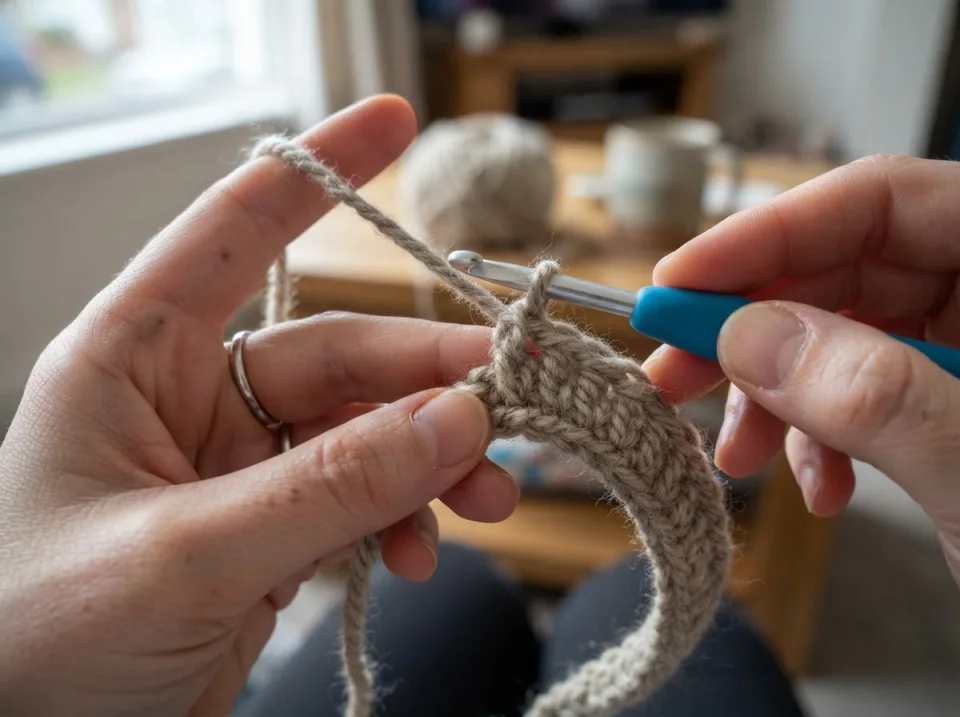
Common systems: chain 1 (does not count) and hdc in the first stitch; or chain 2 (may count as hdc — pattern must say). Pick one per project. Mark the turning chain top if it counts.
Where hdc shines
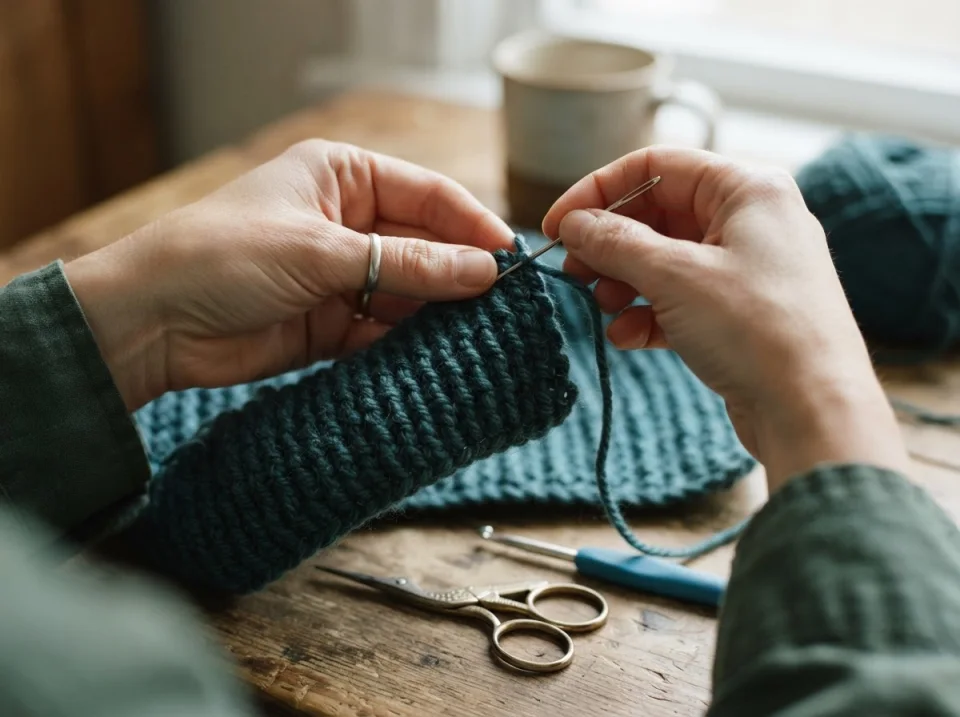
Scarves, baby blankets, basket sides, and anything that needs speed with fewer gaps than double crochet. For amigurumi, sc still wins for density; hdc can show fill unless the hook is very small.
Failures
- Gappy fabric: pull-up too tall or hook too large
- Stiff fabric: hook too small or yanking the final pull-through
- Slanting edges: lost/gained stitch at turning chain — count every row
Rewrite notes for makers using this page
This tutorial was rewritten on the same URL so search indexing stays intact. The structure follows the real decisions of this project — sizing, fiber, order of work, and failure modes — not a shared sitewide template.
Count at the end of every round or row until counting is automatic. Markers beat memory. Record yarn brand, hook, and finished size when you succeed. Wash or wear-test before gifting when the item will leave your house.
Helpful comments include yarn name, hook size, which section failed, and what fixed it. If your gauge differs, report stitches per four inches.
#half double crochet #beginner crochet #crochet stitch tutorial #easy crochet scarf #crochet basics #soft crochet fabric
Comments
No comments yet. Questions, corrections, and notes from your own attempt are welcome.